
Simple Ways to Improve Indoor Air Quality in Your Near East Side Home Without Buying a New System
Your Near East Side home carries historic charm but also unique air quality challenges. San Antonio’s high humidity combined with older construction materials creates conditions where dust, allergens, and moisture problems thrive. The good news is you can significantly improve your indoor air quality without replacing your entire HVAC system.. Read more about How Proper Humidity Control Protects the Hardwood Floors in Your King William Historic Home.
Simple changes like upgrading your air filter to a MERV-13 rating, scheduling professional duct cleaning, and installing a whole-home dehumidifier can reduce airborne contaminants by up to 90%. These solutions target the specific problems older San Antonio homes face, from Mountain Cedar pollen to the musty odors common in pier-and-beam foundations.. Read more about Why Rural St Hedwig Homes Need Specialized Filtration for Dust and Pollen.
Before considering expensive system replacements, try these proven methods that work with your existing equipment. Many Near East Side homeowners see dramatic improvements in just a few days after implementing these strategies.
Understanding Your Near East Side Home’s Air Quality Challenges
Historic homes in the Near East Side face unique air quality issues. The combination of San Antonio’s humid subtropical climate and older construction creates perfect conditions for airborne problems. Homes built before 1980 often have less airtight envelopes, allowing outdoor pollutants to enter freely.. Read more about Solving Airflow Issues in the Historic Narrow Lot Homes of Dignowity Hill.
Mountain Cedar pollen, which causes the infamous “Cedar Fever” in San Antonio, can infiltrate older homes through gaps around windows and doors. The high humidity levels common from May through October promote mold growth in crawl spaces and wall cavities, especially in pier-and-beam foundations typical of older Near East Side properties.
Many older homes also contain materials that release volatile organic compounds over time. Lead paint dust, asbestos particles from deteriorating insulation, and formaldehyde from aging building materials all contribute to poor indoor air quality. These issues compound in the summer when closed windows trap contaminants inside.
Simple Filter Upgrades That Make a Big Difference
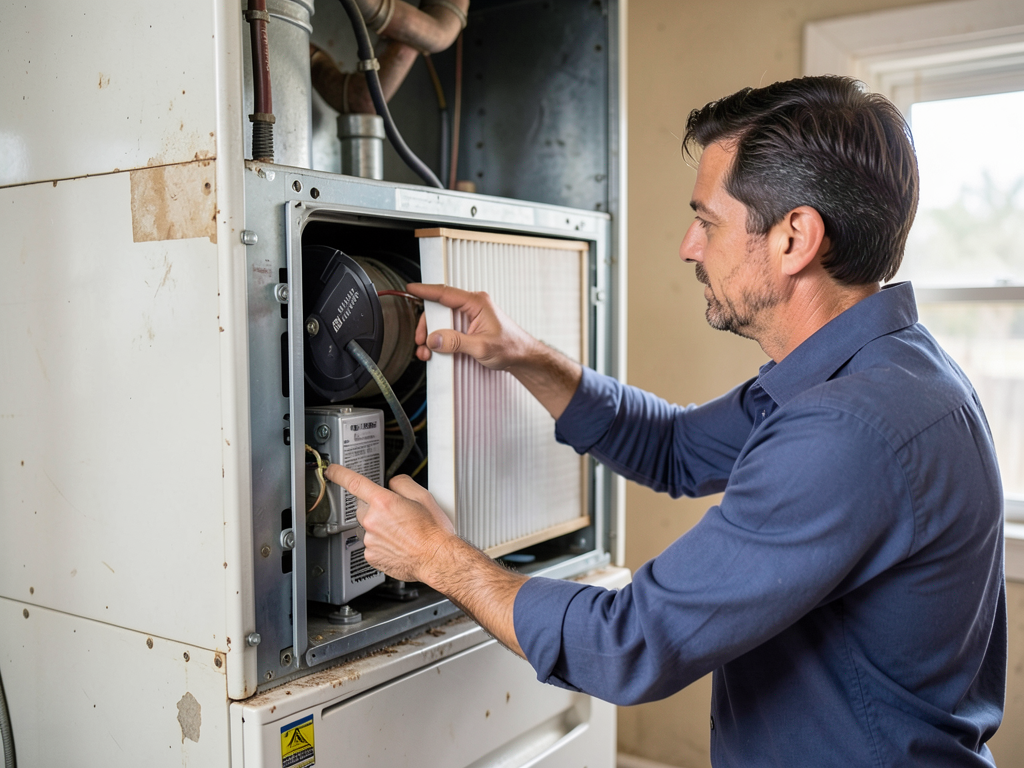
Upgrading your air filter is the fastest way to improve indoor air quality. Standard 1-inch fiberglass filters capture less than 10% of airborne particles, while MERV-13 pleated filters can trap up to 90% of pollen, dust mites, and pet dander.
Most older HVAC systems can handle MERV-13 filters without modification. These filters have tighter pleats that capture smaller particles without significantly restricting airflow when changed regularly. For homes with severe allergy sufferers, HEPA-rated filters (MERV-16) provide hospital-grade filtration but may require system modifications. EPA Indoor Air Quality Information.
Filter replacement frequency matters as much as quality. In San Antonio’s dusty environment, change filters every 30-45 days instead of the standard 90 days. Homes with pets or near construction zones may need monthly changes. Set calendar reminders to maintain consistent air quality improvements.
Pro Tip: Install a filter gauge to monitor pressure drop across your filter. When pressure increases by 20%, it’s time for replacement regardless of the calendar date.
Professional Duct Cleaning for Older Homes
Ductwork in older Near East Side homes often accumulates years of dust, debris, and even rodent contamination. Professional duct cleaning removes these accumulations using high-powered vacuums and agitation tools that reach throughout your entire duct system.
The process typically takes 3-4 hours for a standard home. Technicians use cameras to inspect ducts before and after cleaning, showing you exactly what was removed. NADCA (National Air Duct Cleaners Association) certified professionals follow strict standards to ensure thorough cleaning without damaging your ductwork.
Many older homes have duct insulation that has deteriorated over time. This creates two problems: reduced energy efficiency and potential mold growth in the insulation material. Professional cleaning often includes inspection of duct integrity and recommendations for sealing leaks that allow conditioned air to escape.
According to the EPA, duct cleaning can reduce airborne dust by up to 50% in homes with heavily contaminated systems. This improvement is especially noticeable in historic homes where dust accumulation has occurred over decades.
Humidity Control Without a New System
San Antonio’s humidity often exceeds 70% during summer months, creating ideal conditions for mold growth and dust mite proliferation. A whole-home dehumidifier works with your existing HVAC system to maintain optimal humidity levels between 45-55%.
Stand-alone dehumidifiers can help, but they typically only affect one room and require frequent emptying. Whole-home units connect to your ductwork and drain automatically, treating your entire house continuously. These systems can remove 70-100 pints of moisture per day, significantly reducing the sticky feeling common in older San Antonio homes.
Moisture problems in pier-and-beam foundations are particularly common in Near East Side homes. The crawl space creates a perfect environment for mold growth that can spread throughout your home via the duct system. Installing vapor barriers and ensuring proper foundation ventilation can dramatically improve air quality.
According to ASHRAE Standard 62.2, maintaining relative humidity below 60% is crucial for preventing mold growth and controlling dust mites. This is especially important in San Antonio’s climate where natural humidity levels often exceed this threshold. ASHRAE Indoor Air Quality Standards.
UV Light Systems for Your Existing HVAC
Ultraviolet germicidal irradiation (UVGI) systems installed in your existing ductwork can eliminate up to 99% of airborne bacteria, viruses, and mold spores. These systems use UV-C light, which destroys the DNA of microorganisms, preventing them from reproducing.
Installation takes about 30 minutes and costs significantly less than replacing your entire HVAC system. The UV light mounts near your evaporator coil where mold growth commonly occurs. This placement prevents mold from forming on the coil and being distributed throughout your home via the duct system.
San Antonio’s combination of heat and humidity makes UV systems particularly effective. The UV light works continuously, providing 24/7 protection against biological contaminants. Many homeowners notice reduced allergy symptoms and fresher-smelling air within days of installation.
According to the EPA’s Guide to Air Cleaners in the Home, UVGI systems are most effective when used in conjunction with high-efficiency filters, creating a comprehensive air cleaning strategy without requiring system replacement.
Air Scrubber Technology for Older Homes
Air scrubbers use advanced oxidation technology to actively clean the air and surfaces in your home. These devices produce hydro-peroxide plasma that travels through your existing ductwork, neutralizing contaminants throughout your living space.
Unlike passive filters that only trap particles, air scrubbers actively destroy bacteria, viruses, and VOCs. They also help eliminate odors from cooking, pets, and musty crawl spaces common in older Near East Side homes. Installation typically takes less than an hour and works with any existing HVAC system.
The technology was originally developed for use on the International Space Station, proving its effectiveness in extreme environments. For San Antonio homes dealing with high pollen counts and humidity-related issues, air scrubbers provide comprehensive protection without requiring major system modifications.
Many air scrubber systems also include ionization technology that causes airborne particles to clump together, making them easier for your existing filter to capture. This combination approach can significantly improve air quality without replacing your entire HVAC system.
Ventilation Improvements for Tight Homes
Older homes often have poor ventilation, trapping pollutants inside. Energy recovery ventilators (ERVs) bring fresh outdoor air inside while preconditioning it using energy from stale indoor air. This process improves air quality without significantly increasing energy costs. Premium Air Conditioning Installation for The Dominion and Shavano Park Homes.
ERVs are particularly valuable in San Antonio where outdoor air can be extremely humid. These systems transfer moisture between incoming and outgoing air streams, helping maintain comfortable humidity levels while providing fresh air exchange. Installation typically takes 2-3 hours and works with most existing HVAC setups.
According to the International Residential Code, homes built after 2012 require mechanical ventilation. Many older Near East Side homes never had proper ventilation systems installed. Adding an ERV can bring your home up to current standards without requiring complete system replacement.
Proper ventilation also helps reduce concentrations of volatile organic compounds from household products, cleaning supplies, and off-gassing from older building materials. This is especially important in historic homes where material choices were limited by the era of construction.
Maintenance Practices That Support Better Air Quality
Regular maintenance of your existing HVAC system significantly impacts air quality. Clean evaporator coils, properly sealed ducts, and well-maintained blowers all contribute to better air circulation and filtration. Schedule professional maintenance twice yearly to keep your system operating at peak efficiency. Commercial Maintenance Agreements.
Check your outdoor condenser unit monthly during heavy pollen seasons. San Antonio’s Mountain Cedar and Oak pollen can clog condenser coils, reducing system efficiency and air quality. A simple garden hose cleaning can remove surface debris and improve system performance.
Inspect your return air vents for dust accumulation. Many older homes have return vents in hallways or closets that collect dust over time. Regular vacuuming of these areas prevents dust from being drawn into your HVAC system and redistributed throughout your home.
According to ACCA (Air Conditioning Contractors of America) standards, proper system maintenance can improve HVAC efficiency by up to 30% while simultaneously improving indoor air quality through better air circulation and filtration.
DIY Steps That Complement Professional Solutions
Several simple DIY steps can enhance the air quality improvements from professional solutions. Start by removing shoes at the door to prevent tracking outdoor pollutants inside. This single habit can reduce indoor dust levels by up to 80%.. Read more about UV Lights vs. Ionizers for Removing Bacteria and Odors from Your San Antonio HVAC.
Houseplants can help filter certain VOCs, though they work slowly compared to mechanical systems. Peace lilies, snake plants, and spider plants are particularly effective at removing common indoor pollutants. Place them in areas where you spend the most time for maximum benefit.
Regular cleaning with HEPA-filter vacuums prevents dust from becoming airborne. Microfiber cloths trap dust rather than spreading it around. These simple cleaning practices support the improvements from upgraded filters and professional duct cleaning.
Monitor indoor humidity with a hygrometer. When levels exceed 60%, run exhaust fans in bathrooms and kitchens to remove moisture at the source. This prevents humidity from spreading throughout your home and creating conditions for mold growth.
When to Call a Professional
While many air quality improvements are DIY-friendly, certain situations require professional expertise. If you notice persistent musty odors, visible mold growth, or unexplained allergy symptoms that worsen at home, it’s time to call an HVAC professional.
Professional air quality testing can identify specific contaminants and their sources. This testing is particularly valuable in older homes where multiple air quality issues may exist simultaneously. A professional can create a targeted improvement plan based on actual test results rather than guesswork.
If your home has a pier-and-beam foundation with crawl space issues, professional moisture remediation may be necessary. These problems often require specialized equipment and expertise to resolve properly. The investment in professional help often pays for itself through improved health and comfort.
According to the EPA, indoor air can be 2-5 times more polluted than outdoor air. In San Antonio’s climate, this difference can be even greater due to humidity and pollen levels. Professional assessment helps identify and address these hidden problems.
Cost-Effective Implementation Strategy
Improving indoor air quality doesn’t require a massive upfront investment. Start with the most impactful changes first: upgrade your filter, schedule duct cleaning, and install a whole-home dehumidifier. These three steps often provide 70% of the possible air quality improvement.
Phase additional improvements over 6-12 months based on your budget and results. Many homeowners find that the initial improvements are so significant they delay or eliminate the need for more expensive solutions like complete system replacement.
Consider the long-term health benefits when evaluating costs. Improved air quality can reduce allergy medication needs, improve sleep quality, and prevent respiratory issues. These health benefits often provide returns that exceed the financial investment in air quality improvements.
Many HVAC companies offer financing options for larger improvements. Look for promotions during off-season months when demand is lower. This timing can help you get better pricing on professional services and equipment.
Measuring Your Success
After implementing air quality improvements, you should notice changes within days. Common improvements include reduced dust accumulation, fewer allergy symptoms, and fresher-smelling air. For objective measurement, consider indoor air quality monitors that track particulate matter, VOCs, and humidity levels.
Track your progress with simple observations. Note how often you need to dust furniture, whether morning congestion improves, and if cooking odors dissipate more quickly. These subjective improvements often matter more than numerical measurements.
Professional air quality testing before and after improvements provides concrete data on your success. Many HVAC companies offer this testing as part of their service packages, giving you documented proof of improvement.
According to the American Lung Association, most people spend 90% of their time indoors. The improvements you make to your home’s air quality directly impact your daily health and comfort, making measurement and tracking worthwhile investments.
Frequently Asked Questions
How long does it take to notice air quality improvements?
Most homeowners notice improvements within 24-48 hours after implementing filter upgrades and duct cleaning. Complete results from whole-home systems may take 1-2 weeks as airborne contaminants are gradually removed from your home’s environment.
Will these improvements increase my energy bills?
Most air quality improvements either have minimal impact on energy costs or can actually reduce them. Clean coils and ducts improve system efficiency, while proper humidity control can make your home feel more comfortable at higher thermostat settings.
Are these solutions safe for older HVAC systems?
Yes, all the solutions mentioned are designed to work with existing systems. Professional installation ensures compatibility with your specific equipment. The improvements often extend the life of your current system by reducing strain and preventing common problems.
How much do these improvements typically cost?
Costs vary by home size and specific needs, but most homeowners spend between $500-$2,500 for comprehensive air quality improvements. This is significantly less than the $5,000-$15,000 typically required for complete system replacement.
Can I do everything myself or do I need professionals?
Simple tasks like filter replacement and basic cleaning are DIY-friendly. However, duct cleaning, UV light installation, and whole-home dehumidifier setup require professional tools and expertise to ensure proper installation and optimal results.
Take Action Today for Better Air Tomorrow
Improving your Near East Side home’s air quality doesn’t require replacing your entire HVAC system. Start with simple filter upgrades and professional duct cleaning, then add humidity control and air purification as your budget allows. These steps address the specific challenges older San Antonio homes face while providing immediate health and comfort benefits.
Most homeowners see dramatic improvements within days of implementation. The combination of better filtration, reduced humidity, and active air purification creates a healthier indoor environment without the expense of complete system replacement.
Ready to breathe easier in your historic San Antonio home? Call (726) 259-0059 today to schedule your indoor air quality assessment. Our experienced technicians understand the unique challenges of older Near East Side homes and can recommend the perfect combination of solutions for your specific needs. Don’t wait another day to enjoy cleaner, healthier air in your home.
Pick up the phone and call (726) 259-0059 before the next Mountain Cedar season hits. Your family deserves to breathe clean, healthy air all year round.