





menu

Smart Thermostat Benefits in San Antonio – Cut Your Cooling Bills and Control Comfort From Anywhere

Smart thermostats give San Antonio homeowners precise control over energy use during brutal summer heat, reduce monthly utility costs, and allow remote temperature adjustments from your phone no matter where you are.

Slider Image 1
Slider Image 2
Slider Image 3
Slider Image 4
Slider Image 5
Slider Image 7
Slider Image 8
Slider Image 9
Slider Image 10
Slider Image 11

Why San Antonio Homeowners Are Switching to Smart Thermostats

San Antonio's climate puts real stress on your wallet. Summer temperatures regularly hit 95 degrees and stay there for weeks. Your air conditioner runs nearly non-stop from June through September, and CPS Energy bills climb fast. Traditional thermostats cannot adapt to your schedule. They cool an empty house all day while you work, then struggle to catch up when you get home.

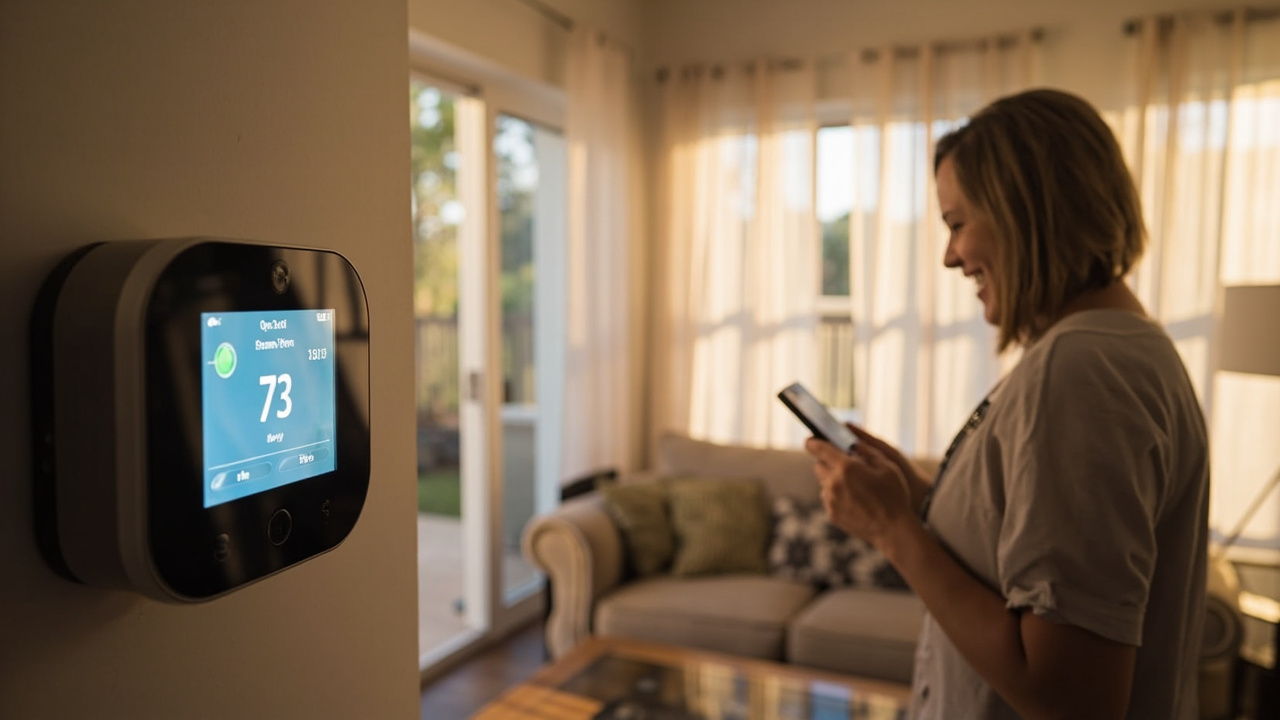
The advantages of smart thermostats show up in three ways. First, they learn your patterns. If you leave for work at 7 a.m. and return at 6 p.m., the system adjusts automatically. It raises the temperature during empty hours, then pre-cools before you arrive. Second, wifi thermostats let you make changes from your phone. Stuck in traffic on I-10? Delay cooling. Leaving work early? Start cooling from your desk. Third, you get data. You see exactly when and why your system runs, which helps you spot inefficiency.

Connected thermostats also respond to San Antonio's unpredictable weather. When a cold front drops temperatures 20 degrees overnight, the system adapts without you touching a button. When humidity spikes after a thunderstorm rolls through from the Gulf, smart sensors adjust fan speed to maintain comfort. The value of smart thermostats is not just convenience. It is control over the second-largest energy expense in your home, which matters when summer cooling can account for 40 percent of your monthly electric bill.

Why San Antonio Homeowners Are Switching to Smart Thermostats
How Smart Thermostats Actually Save You Money

How Smart Thermostats Actually Save You Money

Smart thermostats reduce waste by eliminating the constant baseline cooling traditional thermostats create. A standard programmable thermostat follows a rigid schedule. If you set it for 72 degrees at 6 p.m., it cools to 72 degrees whether you are home or not. A smart system uses occupancy sensors, geofencing, and learning algorithms to understand when cooling is actually needed.

Geofencing is key in San Antonio. The thermostat uses your phone's location to detect when you leave a perimeter around your home. It switches to energy-saving mode automatically. When you cross back into the geofence on your way home, it begins cooling. You walk into a comfortable house without paying to cool it all day. This feature alone can cut cooling costs by 15 to 20 percent during summer months.

Smart thermostats also integrate with zoned HVAC systems common in larger San Antonio homes. If you have a two-story house in Stone Oak or a sprawling ranch in Helotes, you know upstairs bedrooms get hotter than downstairs living areas. A connected thermostat manages multiple zones independently. It cools the bedrooms before bedtime and reduces output in unused spaces during the day. This targeted approach reduces runtime and extends equipment life.

The pros of wifi thermostats extend to maintenance alerts. The system monitors filter life, detects irregular cycling, and flags efficiency drops. You get a notification when something is wrong, which prevents small issues from becoming expensive repairs. In a climate where your air conditioner runs 2,000 to 3,000 hours per year, early detection saves money.

What Happens When You Upgrade to a Smart Thermostat

Smart Thermostat Benefits in San Antonio – Cut Your Cooling Bills and Control Comfort From Anywhere
01

System Compatibility Check

We inspect your existing HVAC system to confirm compatibility with smart thermostat models. Most systems work with modern wifi thermostats, but older heat pump configurations or multi-stage systems require specific models. We check wire count at your current thermostat, verify voltage, and identify whether your system uses a common wire. If a C-wire is missing, we install one or recommend a model with a power adapter to avoid installation issues.
02

Installation and Network Setup

We remove your old thermostat, label wires, and mount the new smart unit. After connecting wires to the correct terminals, we power up the system and test heating and cooling cycles. We connect the thermostat to your home wifi network, sync it with your smartphone, and configure initial settings. We verify the app communicates with the thermostat in real time and confirm geofencing parameters match your daily routine.
03

Training and Optimization

We walk you through the app interface, show you how to create schedules, and explain energy reports. You learn how to adjust temperature remotely, set up vacation mode, and activate alerts for filter changes or system faults. We configure the learning algorithm to begin tracking your preferences. Over the first week, the thermostat adapts to your schedule and starts making automatic adjustments that reduce energy waste without sacrificing comfort.

Why San Antonio Residents Choose Patriot HVAC San Antonio for Smart Thermostat Installation

Smart thermostat installation is not plug-and-play. Compatibility issues, wiring mistakes, and incorrect configuration can leave you with a system that underperforms or fails to connect. We install smart thermostats across San Antonio neighborhoods from Alamo Heights to Helotes, and we understand the common issues that trip up inexperienced installers.

Many older homes in neighborhoods like Monte Vista and King William lack a C-wire, which provides continuous power to modern thermostats. We do not jerry-rig solutions. We either run a proper C-wire from your air handler or install a compatible power adapter that maintains reliable operation. We also handle homes with zoned systems, multi-stage heat pumps, and dual-fuel setups. These configurations require advanced wiring knowledge and specific thermostat models. We match the right device to your equipment.

San Antonio's building practices vary widely depending on home age and neighborhood. Homes built before 1980 often have older wiring and outdated HVAC panels. Homes in newer developments like Cibolo Canyons or Alamo Ranch may have pre-wired smart home infrastructure. We adapt our installation approach to your home's specific setup. We also understand CPS Energy's demand response programs and can configure thermostats to participate in load management initiatives that reduce your bill.

Patriot HVAC San Antonio focuses on getting your smart thermostat working correctly from day one. We test every function before we leave. We confirm your phone connects, geofencing activates, and the system responds to manual and automatic commands. We leave you with a system that works as advertised, not one you have to troubleshoot yourself after we walk out the door.

What to Expect When You Upgrade to a Smart Thermostat

Installation Timeframe

Most smart thermostat installations take between one and two hours. If your home lacks a C-wire and we need to run one from the air handler, expect closer to two hours. Homes with zoned systems or multi-stage equipment may take longer depending on wiring complexity. We schedule installations at your convenience and provide a clear time estimate after the compatibility assessment. You do not need to be home for the entire process, but we walk you through setup and app configuration before we leave.

Initial Consultation and Assessment

We start by asking about your cooling habits, schedule, and goals. Are you home during the day or away at work? Do you want maximum savings or maximum comfort? We check your current thermostat wiring and HVAC equipment. We identify your system type, note the age and condition, and confirm compatibility with your preferred smart thermostat model. If you have not chosen a model yet, we recommend options based on your system and budget. We explain the differences between models so you make an informed choice.

Performance and Comfort Results

You will notice the difference within the first billing cycle. Energy reports in the app show you daily runtime and estimated savings. Most San Antonio homeowners see a 10 to 20 percent reduction in cooling costs during summer. Comfort improves because the system adapts to your routine instead of following a rigid schedule. You stop coming home to a hot house or wasting money cooling an empty one. Remote control means you adjust temperature from anywhere, which is useful during unpredictable Texas weather or last-minute schedule changes.

Ongoing Support and Maintenance

Smart thermostats require minimal maintenance, but we provide support if you need it. We help troubleshoot connectivity issues, answer questions about app features, and adjust settings if your routine changes. The thermostat will alert you when it is time to change your air filter, and we can schedule that service if you prefer. If you upgrade your HVAC system later, we reconfigure the thermostat to match new equipment. We also offer seasonal tune-ups that include thermostat performance checks to confirm everything runs efficiently year-round.

Frequently Asked Questions

You Have Questions,
We Have Answers

Which is the main benefit of the smart thermostat? +

The main benefit is automated energy savings through intelligent scheduling and adaptive learning. Smart thermostats adjust heating and cooling based on your daily patterns, outdoor temperature, and humidity levels. In San Antonio's climate, where AC runs hard from May through October, this means your system operates efficiently during peak heat without overcooling when you're away. You control settings remotely through your phone, so you can adjust temperatures before arriving home. Most models provide energy usage reports that show exactly when and how your HVAC consumes power, helping you identify waste and reduce monthly bills by 10-23% on average.

What are the disadvantages of a smart thermostat? +

The primary disadvantages include upfront cost, Wi-Fi dependency, and compatibility issues with older HVAC systems. Smart thermostats typically cost $120-$300 plus installation. If your internet drops, you lose remote access and scheduling features, though basic temperature control continues. Homes with older furnaces or multi-stage systems may need a C-wire adapter or professional rewiring. Some homeowners, especially seniors, find the initial setup and app interfaces confusing. Privacy concerns exist since these devices collect usage data. In San Antonio's older neighborhoods with historic homes, wiring compatibility becomes a bigger issue that requires assessment before purchase.

Is it worth installing a smart thermostat? +

Yes, especially in San Antonio's demanding cooling climate. The average household saves $131-$145 yearly on cooling costs alone, meaning most smart thermostats pay for themselves within two years. Beyond savings, you gain precise control over indoor comfort during our brutal summer months when temperatures regularly exceed 95 degrees. Remote access prevents returning to a sweltering house after work. Maintenance alerts catch filter changes and system problems early, preventing expensive emergency repairs. If you run your AC heavily from May through September and want detailed energy insights, the investment makes financial sense. Older HVAC systems benefit most from optimized runtime management.

How much money do you save with a smart thermostat? +

Most San Antonio homeowners save between $130-$180 annually, with cooling costs representing the largest portion. Savings depend on your current thermostat habits and home efficiency. If you manually adjust temperatures throughout the day, savings will be minimal. If you leave your AC running at 68 degrees while at work, expect 15-23% reductions in energy costs. San Antonio's long cooling season amplifies savings compared to milder climates. Homes with poor insulation or single-pane windows see smaller returns because conditioned air escapes regardless of thermostat efficiency. Typical payback period runs 18-30 months based on a $250 installation cost.

Is 72 a good temperature for a house? +

72 degrees is acceptable but higher than recommended for optimal efficiency in San Antonio. The Department of Energy suggests 78 degrees when you're home and awake during summer months. Each degree below 78 increases cooling costs by roughly 6-8%. In our climate, where AC runs 8-9 months yearly, setting temperatures at 72 constantly adds $30-$50 monthly to electric bills. Most residents find 76-78 comfortable with proper humidity control and ceiling fan circulation. At night, 74-76 degrees works well for sleep. If 72 feels necessary, check your insulation, ductwork, and AC sizing. Your system may be undersized or losing efficiency.

What happens to a smart thermostat if Wi-Fi goes down? +

Your smart thermostat continues basic temperature control using its last programmed schedule. You lose remote access, real-time adjustments, weather-based optimization, and energy reporting until Wi-Fi reconnects. The device stores your preset schedule locally, so heating and cooling continue automatically. You can manually adjust temperature using buttons or the touchscreen interface. In San Antonio, where afternoon thunderstorms occasionally disrupt internet service, this backup functionality prevents system shutdown. Most models hold settings for weeks without connectivity. When Wi-Fi restores, the thermostat syncs data and resumes smart features. Permanent internet loss essentially converts the device back to a programmable thermostat.

Is Google abandoning the Nest thermostat? +

No. Google continues supporting and selling Nest thermostats, including firmware updates and customer service. Confusion stems from Google's 2023 decision to phase out the standalone Nest app in favor of integrating devices into the Google Home app. Your Nest thermostat remains functional with ongoing software support. Google still manufactures new Nest Learning Thermostats and Nest Thermostat models. In San Antonio's smart home market, Nest remains a popular choice among HVAC professionals for compatibility and reliability. If you own a Nest, expect continued operation and updates. Google has made no announcements suggesting product discontinuation or reduced support.

Why is my AC set at 74 but reads 78? +

Your AC struggles to reach the set temperature due to insufficient cooling capacity, poor airflow, or extreme outdoor conditions. In San Antonio's summer heat, when outdoor temps hit 100-plus degrees, even properly sized systems may lag 3-4 degrees behind during peak afternoon hours. Check your air filter first. A clogged filter restricts airflow and reduces cooling efficiency by 15-20%. Low refrigerant levels, dirty condenser coils, or undersized equipment also cause this problem. If the gap persists after sunset when temps drop, your system needs professional diagnosis. Duct leaks in attics lose 20-30% of cooled air before reaching living spaces.

Can a thermostat cause a high electric bill? +

Yes, but only if malfunctioning. A thermostat with faulty temperature sensors can misread room temperature and run your HVAC excessively. Incorrectly programmed schedules that cool or heat when unnecessary waste energy. Old mercury thermostats lose calibration over time, running equipment longer than needed. In San Antonio homes, a thermostat placed near heat sources like windows or appliances triggers extra AC cycles. Dirt buildup on sensor components causes inaccurate readings. However, the thermostat itself uses minimal electricity. High bills usually trace to HVAC inefficiency, poor insulation, or duct problems. Upgrading to a smart thermostat often reveals the real energy waste through detailed usage reports.

Can you just replace a thermostat with a smart thermostat? +

Most homeowners can replace a standard thermostat with a smart model if compatible wiring exists. You need a C-wire (common wire) for continuous power, which many San Antonio homes built after 2000 include. Older homes may lack this wire, requiring an adapter or professional installation to add one. Turn off power at the breaker, remove the old thermostat, label wires by terminal letter, and connect them to corresponding terminals on the new device. Mount the base plate level, attach the display, and restore power. If you have a heat pump, multi-stage system, or feel uncertain about electrical work, hire an HVAC technician.

Why San Antonio's Summer Heat Makes Smart Thermostat Upgrades Essential

San Antonio averages 110 days per year above 90 degrees. Your air conditioner works harder and longer than in most cities. Traditional thermostats cannot respond to real-time conditions. When a heat wave pushes afternoon temperatures to 102 degrees, your system runs continuously just to maintain setpoint. A smart thermostat uses outdoor temperature data and predictive algorithms to pre-cool your home during cheaper morning hours, then reduce runtime during peak afternoon demand. This strategy lowers your bill and reduces strain on your compressor. The reasons to upgrade to a smart thermostat in San Antonio are financial and practical. You gain control over the largest variable expense in your monthly budget.

San Antonio HVAC companies see thousands of service calls every summer. Many result from systems that run too hard for too long. Smart thermostats extend equipment life by reducing unnecessary cycling and preventing the constant baseline load traditional thermostats create. Local contractors who understand CPS Energy rate structures can configure your thermostat to shift cooling load away from peak hours when electricity costs more. Patriot HVAC San Antonio knows how San Antonio homes are built, how they heat and cool, and which smart thermostat features deliver the best return on investment in this specific climate.
HVAC Services in The San Antonio Area

Patriot proudly serves San Antonio and surrounding communities with fast, reliable HVAC services. Use the map below to locate our service area and see if we’re available in your neighborhood. Whether you need a quick repair or full installation, we’re just a call away. Our mobile team is equipped and ready to meet you where you are. Count on Patriot for dependable service with a local touch.

Address:
Patriot HVAC San Antonio, 1100 Northwest Loop, San Antonio, TX, 91335

Additional Services We Offer

Our news updates

Latest Articles & News from The Blogs

Why Your AC Vents Are Whistling and How to Stop the Noise for Good That high-pitched whistle coming from your…

Why Your AC Vents Are Whistling and How to Stop the Noise for Good

Why Your AC Vents Are Whistling and How to Stop the Noise for Good That high-pitched whistle coming from your…

Why 72 Degrees Feels Different in San Antonio Than It Does Anywhere Else

Why 72 Degrees Feels Different in San Antonio Than It Does Anywhere Else When you set your thermostat to 72…

What Jefferson Terrace Homeowners Should Know About Older Ductwork and Modern Air Quality

What Jefferson Terrace Homeowners Should Know About Older Ductwork and Modern Air Quality \n\n Jefferson Terrace homes built in the…

Contact Us

Stop overpaying to cool an empty house. Call Patriot HVAC San Antonio at (726) 259-0059 to schedule your smart thermostat installation. We assess your system, recommend the right model, and get you up and running fast.