





menu

Holiday Heating Repair in San Antonio – 24/7 Emergency Response When Your Family Needs It Most

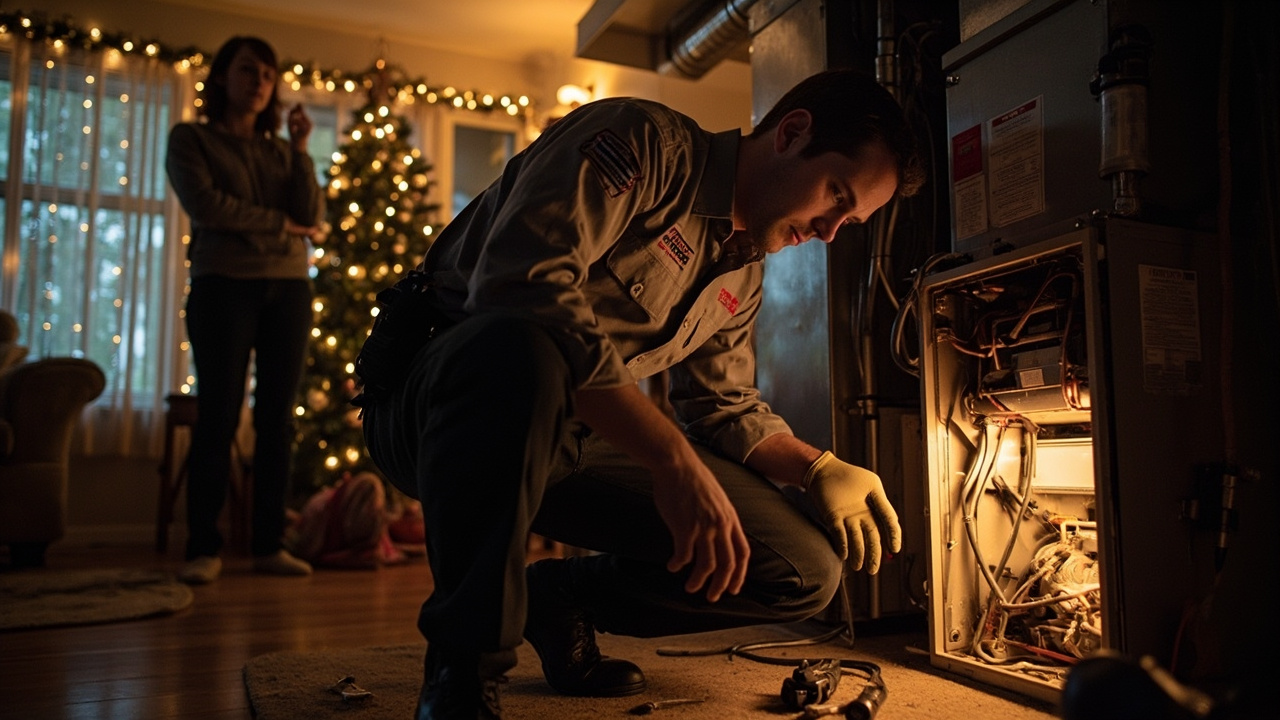
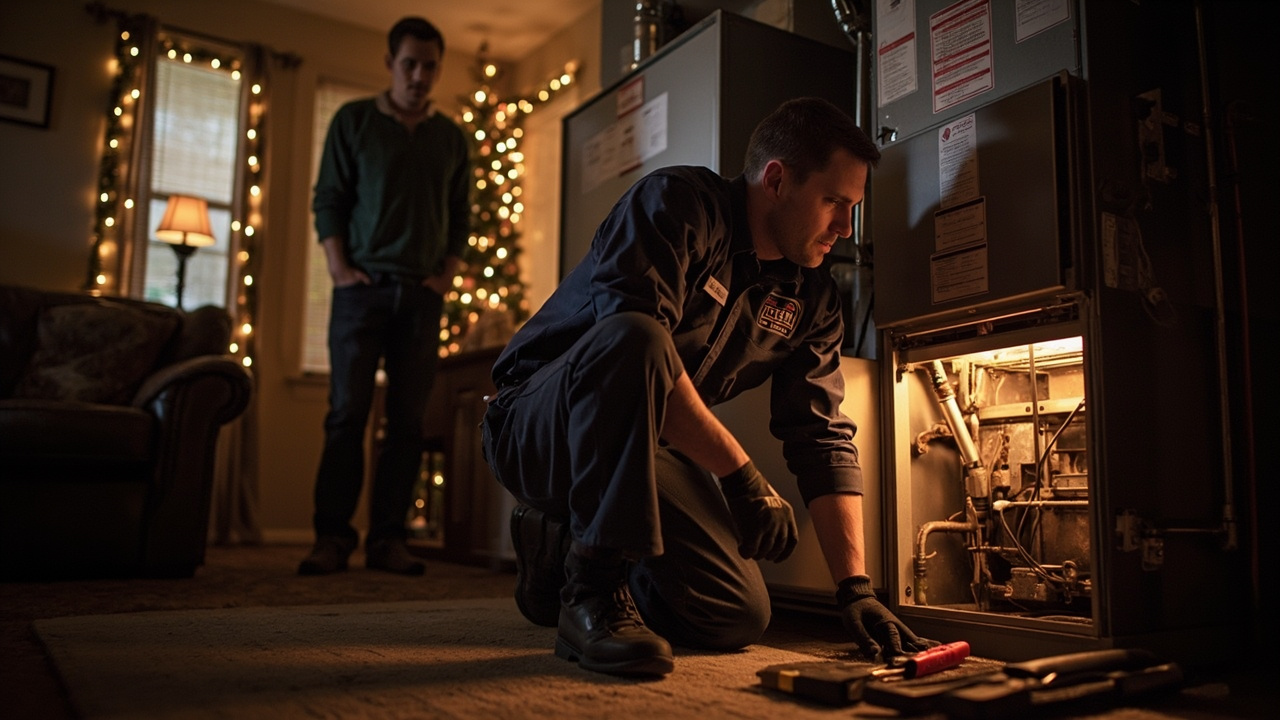
Your furnace doesn't wait for business hours to fail. When holiday heating emergencies strike, Patriot HVAC San Antonio dispatches certified technicians within the hour to restore comfort and safety to your home.

Slider Image 1
Slider Image 2
Slider Image 3
Slider Image 4
Slider Image 5
Slider Image 7
Slider Image 8
Slider Image 9
Slider Image 10
Slider Image 11

When Your Heating System Fails on Christmas Eve

The temperature drops to 35 degrees on Thanksgiving night. Your furnace clicks off. The house goes cold while your family gathers for the weekend.

Holiday heating failures hit San Antonio homes hard because families depend on their systems during the exact moments when repair companies close. You call five numbers. Four go to voicemail. The fifth quotes you a price that triples the normal rate.

San Antonio's fluctuating winter temperatures stress heating systems in ways that northern climates never see. When the mercury swings from 75 degrees during the day to 30 degrees at night, furnaces cycle on and off repeatedly. Heat exchangers expand and contract. Ignition systems misfire. Blower motors strain under the load.

These thermal cycles create failure points that show up at the worst times. The Monday after Christmas. New Year's Day morning. The night before guests arrive.

Emergency holiday furnace repair means more than fixing broken equipment. It means protecting your family from dangerous carbon monoxide exposure when a cracked heat exchanger goes undetected. It means preventing frozen pipes when temperatures drop unexpectedly. It means keeping elderly relatives and young children safe when indoor temperatures fall below healthy levels.

After hours furnace repair requires technicians who stock parts in their vehicles, carry diagnostic equipment, and know how to troubleshoot systems in the dark. 24 hour heating repair demands response infrastructure that stays operational when everyone else shuts down.

Your heating system will fail. The question is whether you have access to emergency heating repair service when it happens.

When Your Heating System Fails on Christmas Eve
How Emergency Heating Repair Works After Midnight

How Emergency Heating Repair Works After Midnight

Standard repair protocols fail during emergency calls. You cannot order parts. You cannot schedule return visits. You cannot wait until morning.

Emergency heating repair requires technicians to diagnose and fix problems using only the equipment in their truck. That means carrying backup ignitors for ten different furnace models. It means stocking limit switches, flame sensors, and capacitors for brands that stopped manufacturing five years ago.

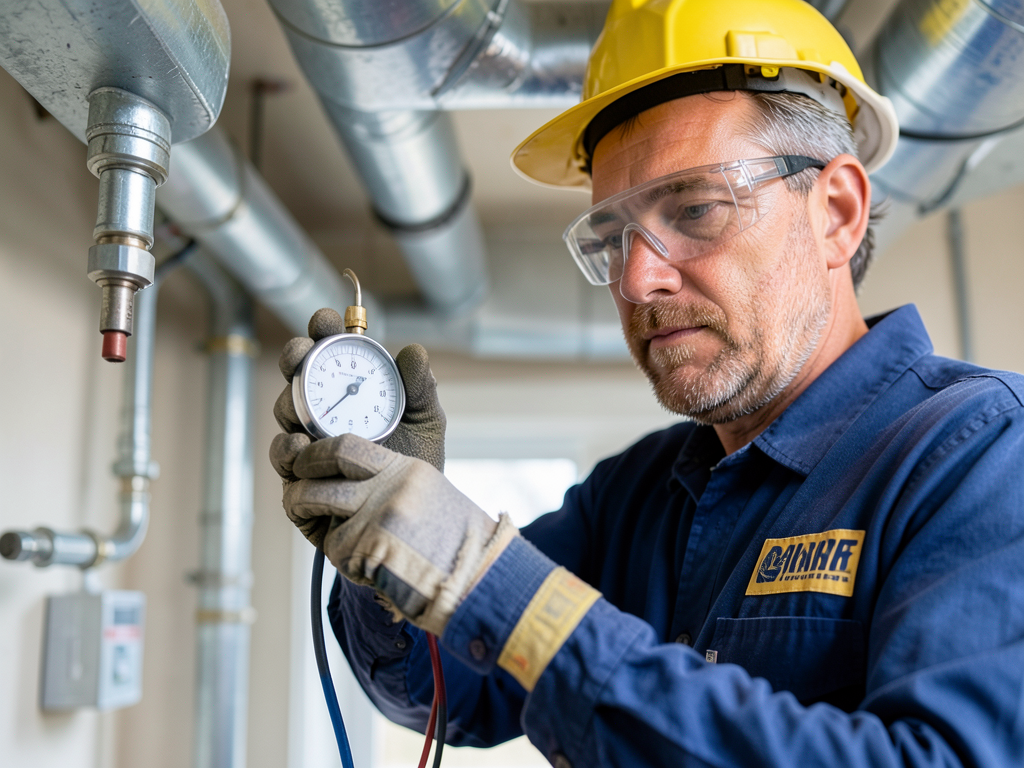
We arrive with thermal imaging cameras that detect heat exchanger cracks invisible to standard inspection. We carry combustion analyzers that measure carbon monoxide levels in parts per million. We use manometers to test gas pressure at the valve and verify proper manifold pressure at the burners.

The diagnostic process starts at the thermostat. We verify voltage at the R and C terminals. We check for continuity across the W terminal when the system calls for heat. We trace the 24-volt control circuit back to the furnace board.

At the unit, we test the pressure switch before the inducer motor starts. We verify proper draft through the flue pipe. We check flame rectification current to confirm the sensor reads the burner flame. We measure temperature rise across the heat exchanger to verify proper airflow.

San Antonio's high humidity creates condensation inside flue pipes. That moisture corrodes pressure switch tubing and clogs drain lines. We clear those blockages with compressed air and replace corroded components on the spot.

The repair either happens during the first visit or it does not happen. We do not schedule callbacks for emergency holiday furnace repair. We fix the system while we are there, even if that takes three hours at 2 AM.

What Happens When You Call for Holiday Heating Emergency

Holiday Heating Repair in San Antonio – 24/7 Emergency Response When Your Family Needs It Most
01

Immediate Dispatch

You call our emergency line at (726) 259-0059. A technician answers, not an answering service. We collect your address, confirm your heating system type, and ask three diagnostic questions about symptoms. A service truck leaves our facility within 15 minutes. You receive a text message with technician name, photo, and estimated arrival time. Our trucks carry parts for 90 percent of residential furnace repairs in San Antonio.
02

On-Site Diagnosis

The technician tests your system using diagnostic equipment designed for emergency calls. We check voltage, amperage, gas pressure, and flame characteristics in the first ten minutes. We identify the failed component and verify whether repair or replacement makes sense for your specific situation. You receive a fixed price before work begins. We explain exactly what failed, why it failed, and what we need to do to restore heat to your home.
03

Restore and Verify

We replace the failed component and test system operation through three complete heating cycles. We verify proper temperature rise, confirm adequate airflow, and measure carbon monoxide levels in your living space. Before we leave, your home reaches comfortable temperature. You receive documentation of all repairs, including part numbers and manufacturer information. We provide guidance on maintenance steps that prevent similar failures during the next holiday season.

Why San Antonio Families Call Patriot HVAC for Holiday Emergencies

Emergency heating repair separates competent technicians from experts who understand how systems fail under stress.

Most San Antonio HVAC companies contract their after hours calls to third party services. Those services dispatch whoever answers the phone, regardless of experience level. You get a technician who works on air conditioners nine months per year and rarely diagnoses heating systems.

Patriot HVAC San Antonio maintains dedicated emergency technicians who carry manufacturer certifications for Carrier, Trane, Lennox, Rheem, and Goodman systems. These certifications matter because each manufacturer uses different control board logic, different safety switch sequences, and different flame sensing technology.

When a Carrier furnace shows a two-flash error code, that indicates pressure switch failure. The same two-flash code on a Goodman furnace means limit switch lockout. A technician who does not know these distinctions wastes your time testing the wrong components.

We stock our emergency vehicles based on failure patterns we see in San Antonio homes. Gas valve failures spike during the first cold snap when systems sit unused for eight months. Blower motor capacitors fail during extreme temperature swings. Ignition systems corrode from humidity exposure during the cooling season.

Our pricing stays consistent regardless of time or date. We do not triple our rates on Christmas Day. We do not add holiday surcharges or after midnight fees. You pay the same price whether you call Tuesday afternoon or Sunday at 3 AM.

The emergency phone line connects directly to technicians in the field. You speak with someone who understands furnace repair, not a call center operator reading from a script. That matters when you need to describe symptoms or answer diagnostic questions about system behavior.

What to Expect During Emergency Holiday Service

Response Time and Availability

Emergency heating repair trucks leave our facility within 15 minutes of your call. Most San Antonio locations receive service within 60 minutes, depending on technician position and traffic conditions. We maintain two dedicated emergency vehicles during holiday periods when call volume increases. Our technicians work 12-hour rotating shifts that ensure coverage every hour of every day, including Thanksgiving, Christmas, and New Year's Day. You will not reach voicemail. You will not wait until morning. When your furnace fails at midnight on December 25, a certified technician responds before your house temperature drops below 60 degrees.

Emergency Diagnostic Process

The diagnostic process begins before the technician reaches your home. During your initial call, we ask specific questions about system symptoms that help us predict likely failure points. The technician arrives with suspected components already pulled from inventory. On-site diagnosis takes 15 to 30 minutes using combustion analyzers, voltage meters, and thermal imaging equipment. We test the thermostat circuit, verify gas valve operation, check flame sensor current, and measure temperature rise across the heat exchanger. You receive a clear explanation of what failed and what repair costs before any work begins. Emergency calls never proceed without your explicit approval.

Repair Quality and Parts

Emergency repairs use the same OEM parts we install during scheduled service calls. We do not use aftermarket components or temporary fixes that fail within weeks. Each truck stocks igniters, flame sensors, pressure switches, gas valves, blower motors, and control boards for common residential systems. If your furnace requires a part we do not carry, we source it from local suppliers who maintain holiday inventory. The repair includes testing through multiple heating cycles to verify proper operation. We measure supply air temperature, verify proper airflow across the heat exchanger, and test safety switch operation before we leave your home.

Follow-Up and Documentation

Emergency repairs include the same parts coverage we provide during standard service calls. You receive detailed documentation showing exactly what component failed, what we replaced, and what maintenance steps prevent similar failures. We test your system 24 hours after the emergency repair at no additional charge. This follow-up visit verifies that the repair holds under normal operating conditions and catches any secondary issues that surface after the initial failure. If additional problems appear within 30 days related to the emergency repair, we return at no charge to address them. You also receive a maintenance checklist specific to your furnace model.

Frequently Asked Questions

You Have Questions,
We Have Answers

What is the $5000 rule for HVAC? +

The $5000 rule is a simple repair-versus-replace guideline. Multiply the age of your furnace by the repair cost. If the total exceeds $5000, replacement makes more financial sense. For example, if your 15-year-old furnace needs a $400 repair, that equals $6000, so replacement is the better move. This rule accounts for efficiency losses and future repair risks in aging systems. In San Antonio, where heating systems work less frequently than cooling, many homeowners push older furnaces beyond their prime. Get a diagnostic before the holiday rush to avoid emergency decisions when your family visits.

What are common holiday heating problems? +

Holiday heating failures spike because systems sit idle for months after San Antonio's long cooling season. Common problems include pilot light failures, dirty flame sensors, clogged air filters, and seized blower motors. Thermostat batteries often die during the first cold snap. Ductwork in attics can develop leaks or disconnects from summer heat expansion. Critters sometimes nest in unused furnaces. Many systems fail during the first hard freeze when you need heat most. Your furnace needs a test run in November before guests arrive. Do not wait until Christmas morning when repair availability drops and temperatures plummet.

How much do heating repairs cost? +

Most heating repairs in San Antonio range from $150 for simple fixes like thermostat replacement to $1200 for blower motor or heat exchanger work. Ignition system repairs typically cost $300 to $600. Emergency holiday service carries premium rates, sometimes 50 percent higher than standard calls. The variability depends on the failing component, labor time, and your system's age. Older furnaces need harder-to-find parts. Get multiple diagnostics if a repair quote exceeds half your system's replacement cost. Regular maintenance prevents most emergency repairs. Schedule service before the holiday season to avoid inflated emergency pricing.

What does a seasonal HVAC tune up include? +

A seasonal tune up includes inspecting the heat exchanger for cracks, testing ignition systems, cleaning or replacing the flame sensor, checking gas pressure, lubricating the blower motor, and replacing the air filter. Technicians test thermostat calibration, inspect ductwork connections, measure combustion efficiency, and check for carbon monoxide leaks. In San Antonio, techs also clear debris from outdoor units and check condensate drains. The service confirms safe operation before heavy use. Tune ups catch small issues before they become holiday emergencies. Schedule yours in October or early November before the holiday rush and first freeze.

What is the tax credit for HVAC system 2025? +

The 2025 federal tax credit offers up to 30 percent back on qualifying high-efficiency HVAC systems, capped at $2000 annually. Your new furnace must meet ENERGY STAR Most Efficient standards. Heat pumps qualify for higher credits. You claim the credit when filing your federal tax return using IRS Form 5695. The Inflation Reduction Act extends these credits through 2032. Check specific equipment certifications before purchase. San Antonio residents can stack this federal credit with CPS Energy rebates for additional savings. Consult a tax professional to confirm eligibility. Installation must occur within the tax year you claim.

What is the 3 minute rule for air conditioners? +

The 3-minute rule prevents compressor damage by requiring a minimum 3-minute delay between shutdown and restart. When your AC stops, refrigerant pressure remains high. Restarting too quickly forces the compressor to work against this pressure, causing premature failure. Modern thermostats have built-in delay timers. You will notice this when adjusting your thermostat and the system does not immediately respond. Never repeatedly flip breakers or rapidly cycle your thermostat during troubleshooting. This delay protects expensive components. In San Antonio's demanding cooling climate, respecting this rule extends your compressor's lifespan and prevents costly emergency replacements.

What is the most expensive part to fix on a furnace? +

The heat exchanger is the most expensive furnace component, costing $1200 to $2500 installed. This metal chamber transfers combustion heat to your home's air. Cracks develop from thermal stress and age, creating dangerous carbon monoxide risks. Replacement requires extensive labor and often costs more than half a new furnace's price. For systems over 15 years old, replacement beats repair. Other expensive parts include draft inducer motors and variable-speed blower assemblies. In San Antonio, heat exchangers sometimes fail prematurely from infrequent use and thermal cycling. Annual inspections catch cracks early before they become safety hazards.

How long does it take to heat a house from 50 to 70? +

Heating a house from 50 to 70 degrees typically takes 2 to 4 hours, depending on your home's size, insulation quality, outdoor temperature, and furnace capacity. Older furnaces work slower. Poor insulation in San Antonio's older homes increases heating time. Single-pane windows and attic air leaks waste heat. Your thermostat location matters. If placed on a cold exterior wall, it may overheat other rooms while struggling to reach setpoint. Raising temperature gradually prevents system strain. Avoid cranking your thermostat to 80 hoping for faster heat. Furnaces heat at one speed regardless of setpoint.

Why does my house feel cold at 73? +

Your house feels cold at 73 degrees because of drafts, poor insulation, humidity levels, or radiant heat loss. San Antonio homes often lack proper insulation since builders prioritize cooling. Cold windows and floors create discomfort even when air temperature is adequate. Low humidity in winter makes air feel colder. Your thermostat may be misplaced in a warmer area, reading higher than the rest of your home. Ductwork leaks waste heated air in attics and crawlspaces. Old furnaces struggle to maintain even temperatures. Check for drafts around windows and doors. Consider a humidity check and insulation upgrade.

Is it cheaper to fix a furnace or replace it? +

Repair makes sense if your furnace is under 10 years old and the fix costs less than one-third of replacement. Replace if your system exceeds 15 years, needs frequent repairs, or has a cracked heat exchanger. Use the $5000 rule as a guide. In San Antonio, furnaces often outlast their northern counterparts because of lighter use, but efficiency still degrades. New furnaces save 20 to 40 percent on heating costs and include warranties. Avoid emergency holiday replacements by evaluating aging systems in fall. Get multiple quotes and consider financing options before deciding.

How San Antonio's Winter Temperature Swings Cause Holiday Heating Failures

San Antonio's winter climate creates heating system stress that northern cities never experience. Daytime temperatures reach 75 degrees, then drop to 32 degrees after sunset. Your furnace runs hard for three hours, shuts off for six hours, then cycles on again when the next cold front arrives. These extreme thermal swings cause heat exchangers to expand and contract repeatedly, creating metal fatigue that leads to cracks. The constant cycling wears out limit switches, pressure switches, and blower motor bearings. Gas valves that work perfectly in September fail in December after months of temperature-driven expansion cycles. This pattern explains why emergency holiday furnace repair calls spike during the first sustained cold period each winter.

San Antonio heating contractors who understand local failure patterns stock parts differently than northern companies. We carry extra ignitors for systems that sit unused eight months per year and corrode from humidity exposure. We stock pressure switches sized for the low gas pressures common in older San Antonio neighborhoods. We maintain relationships with local suppliers who stay open during holidays because they know heating emergencies cluster around major cold fronts. That local infrastructure matters when you need 24 hour heating repair on Christmas morning. National chains and franchise operations rely on regional warehouses that close during holidays, leaving their technicians unable to source critical components when your family needs heat most.
HVAC Services in The San Antonio Area

Patriot proudly serves San Antonio and surrounding communities with fast, reliable HVAC services. Use the map below to locate our service area and see if we’re available in your neighborhood. Whether you need a quick repair or full installation, we’re just a call away. Our mobile team is equipped and ready to meet you where you are. Count on Patriot for dependable service with a local touch.

Address:
Patriot HVAC San Antonio, 1100 Northwest Loop, San Antonio, TX, 91335

Additional Services We Offer

Our news updates

Latest Articles & News from The Blogs

Why Your AC Vents Are Whistling and How to Stop the Noise for Good That high-pitched whistle coming from your…

Why Your AC Vents Are Whistling and How to Stop the Noise for Good

Why Your AC Vents Are Whistling and How to Stop the Noise for Good That high-pitched whistle coming from your…

Why 72 Degrees Feels Different in San Antonio Than It Does Anywhere Else

Why 72 Degrees Feels Different in San Antonio Than It Does Anywhere Else When you set your thermostat to 72…

What Jefferson Terrace Homeowners Should Know About Older Ductwork and Modern Air Quality

What Jefferson Terrace Homeowners Should Know About Older Ductwork and Modern Air Quality \n\n Jefferson Terrace homes built in the…

Contact Us

Your furnace will not fix itself. Every hour without heat drops your indoor temperature and increases risk to your family. Call Patriot HVAC San Antonio at (726) 259-0059 right now. A certified technician will answer your call and dispatch immediately to restore heat to your home.