
Determining if You Really Need a Hard Start Kit for Your Older San Antonio AC Unit
Your air conditioner should start up quickly and run smoothly even on the hottest San Antonio afternoons. If your older unit hesitates, clicks, or makes your lights flicker when it kicks on, that’s not normal. These are signs your compressor is struggling to start under the extreme Texas heat load. Air Conditioning, Heating and Refrigeration Institute.
A hard start kit can give your aging compressor the boost it needs to start reliably without drawing excessive power or overheating. But how do you know if it’s the right solution or just a temporary fix before a full replacement? This guide breaks down exactly what a hard start kit does, the warning signs your system needs one, and when it makes sense to install one in San Antonio’s climate.
San Antonio’s 100-degree summer days put extreme stress on air conditioning compressors. When outdoor temperatures climb, the compressor must work harder to overcome high head pressure and start the cooling cycle. Older units with worn bearings, low refrigerant, or failing capacitors often can’t handle this extra load, leading to hard starting, short cycling, and eventual compressor failure. Premium Air Conditioning Installation for The Dominion and Shavano Park Homes.
Before you spend money on a hard start kit, you need to understand what’s really happening inside your system. A proper diagnosis from a licensed HVAC technician can determine if a $200-$300 hard start kit will extend your compressor’s life or if you’re better off planning for a replacement.
Call (726) 259-0059 today to schedule your diagnostic inspection and find out if a hard start kit is the right solution for your home.
How San Antonio’s Extreme Heat Affects Older AC Compressors
San Antonio’s climate creates unique challenges for air conditioning systems. The combination of high temperatures, humidity, and extended cooling seasons means compressors run for more hours per year than in milder climates. This constant operation accelerates wear on critical components.
When outdoor temperatures exceed 95 degrees, the pressure inside your AC’s condenser coil increases significantly. Your compressor must generate enough torque to overcome this high head pressure and start the refrigerant cycle. In older units, this starting torque requirement can be 5-7 times higher than normal running amperage.
According to the Air Conditioning, Heating and Refrigeration Institute (AHRI), compressor starting amperage can spike to 300-400% of normal running current during initial startup. In San Antonio’s heat, this surge becomes even more pronounced, especially when combined with voltage drops from the local power grid during peak demand hours.
CPS Energy often issues high-demand alerts during summer afternoons when everyone’s AC is running at maximum capacity. These voltage fluctuations can cause hard starting in units that are already borderline, leading to the clicking sounds and flickering lights many homeowners notice.

Diagram showing how a hard start kit provides additional torque during compressor startup in high-temperature conditions
What Exactly Is a Hard Start Kit and How Does It Work?
A hard start kit is a simple but effective device that helps your AC compressor start more easily. It consists of two main components: a start capacitor and a potential relay. Together, they provide an extra electrical boost during the critical first half-second when the compressor tries to start.
The start capacitor stores electrical energy and releases it all at once when the compressor tries to start. This provides the extra torque needed to overcome high head pressure and get the compressor turning. The potential relay monitors the compressor’s electrical characteristics and disconnects the start capacitor once the compressor reaches about 75% of its running speed.
Without a hard start kit, your compressor relies solely on its run capacitor to provide starting torque. As compressors age, their internal components develop more resistance and require more torque to start. A failing run capacitor compounds this problem, often causing the compressor to draw excessive current and trip circuit breakers.
Hard start kits come in different configurations. The most common is a 2-wire kit that connects directly to the compressor terminals. Some newer systems use 3-wire kits that also provide protection against voltage spikes and power surges, which are common during San Antonio’s summer thunderstorms.. Read more about Common HVAC Problems We See in 1980s Era Homes Across Heritage Northwest.
The National Electrical Code requires that any modifications to HVAC equipment must be performed by licensed professionals who understand the specific voltage and amperage requirements of your system. Improper installation can damage the compressor or create fire hazards.
5 Warning Signs Your San Antonio AC Needs a Hard Start Kit
Recognizing the symptoms of hard starting can help you address problems before they lead to complete compressor failure. Here are the five most common signs that your older AC unit might benefit from a hard start kit installation.
Flickering Lights When AC Starts. When your air conditioner kicks on, do the lights in your home briefly dim or flicker? This happens when the compressor draws a large inrush current during startup. In San Antonio’s older neighborhoods with aging electrical infrastructure, this symptom is particularly common.
Clicking Sounds from the Outdoor Unit. A healthy compressor should start with a smooth hum. If you hear rapid clicking or chattering sounds when your AC tries to start, the compressor is struggling to overcome internal resistance. This clicking often indicates the run capacitor is failing or the compressor is seizing.
Short Cycling Behavior. Does your AC turn on and off rapidly without completing a full cooling cycle? This short cycling occurs when the compressor can’t maintain consistent operation and repeatedly tries to restart. Each failed attempt generates heat and stress on the compressor windings.
Circuit Breaker Tripping. When a compressor draws too much current during startup, it can trip the dedicated circuit breaker for your outdoor unit. If you find yourself resetting the AC breaker frequently, especially during hot afternoons, this indicates hard starting problems.
Increased Energy Bills. A compressor that struggles to start often runs longer to achieve the same cooling effect. You might notice your summer electric bills climbing even though your thermostat settings haven’t changed. This inefficiency occurs because the system works harder to overcome startup resistance.
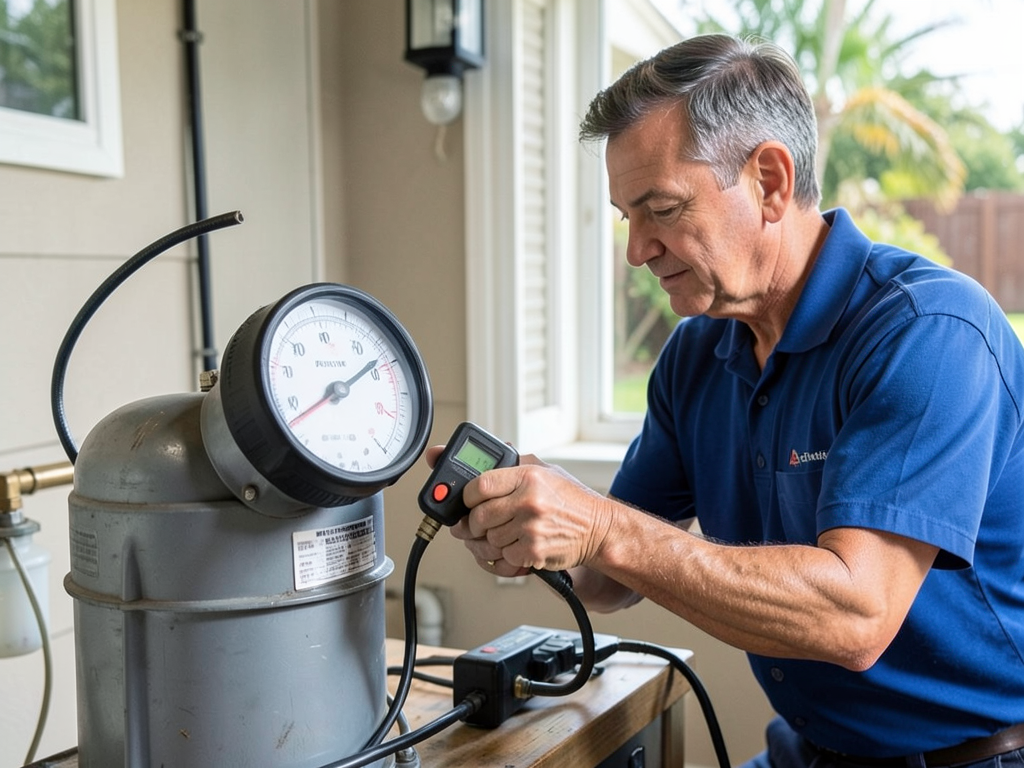
Photo showing a technician testing compressor amperage draw with a clamp meter to diagnose hard starting issues
Benefits of Installing a Hard Start Kit in San Antonio Homes
A properly installed hard start kit can provide several benefits for older AC units in San Antonio’s climate. Understanding these advantages helps you decide if the investment makes sense for your specific situation.
Extended Compressor Life. The most significant benefit is reduced wear on your compressor’s internal components. By providing the extra torque needed for reliable starting, a hard start kit prevents the excessive current draw that damages compressor windings over time. This can add 2-3 years to an aging compressor’s service life.
Reduced Energy Consumption. When a compressor starts easily, it draws less current during the critical startup phase. This translates to lower energy consumption and can reduce your cooling costs by 5-10% during peak summer months. In San Antonio, where AC runs for 6-8 months per year, these savings add up quickly.
Prevention of Emergency Breakdowns. Compressor failure often happens at the worst possible time – during a 100-degree heatwave when repair services are busiest. A hard start kit can prevent the sudden, complete failure that leaves you without cooling when you need it most.
Protection Against Power Fluctuations. San Antonio’s electrical grid experiences voltage sags and surges during high-demand periods. A quality hard start kit with surge protection can shield your compressor from these fluctuations, which are a leading cause of premature compressor failure.
Quieter Operation. Compressors that struggle to start often make loud humming, clicking, or chattering noises. Once a hard start kit is installed, many homeowners notice their outdoor unit operates more quietly, especially during startup.
Professional Installation vs. DIY: Why This Isn’t a Simple Fix
While hard start kits are relatively inexpensive components, installing them requires professional expertise. The high voltages involved and the precise calibration needed make this a job for licensed HVAC technicians.
Air conditioning capacitors store electrical energy even when the power is off. A start capacitor can hold a dangerous charge that can deliver a severe or fatal shock if mishandled. Professional technicians use proper discharge procedures and insulated tools to ensure safety.
The relay timing in a hard start kit must be precisely calibrated to your specific compressor model. If the relay disconnects too early, the compressor won’t get enough boost. If it disconnects too late, the start capacitor can overheat and fail. This calibration requires specialized equipment and experience.
Many San Antonio homes have electrical systems that are 30-40 years old. Before installing a hard start kit, a technician should inspect your electrical panel, wiring, and circuit capacity. Some older homes may need electrical upgrades to safely support the modified startup characteristics.
The Texas Department of Licensing and Regulation requires HVAC contractors to be licensed and insured. Working with unlicensed individuals not only violates state law but also voids manufacturer warranties and can create liability issues if something goes wrong. Texas Department of Licensing and Regulation.
Professional installation includes a complete system diagnosis to ensure the hard start kit addresses the root cause of your starting problems. Sometimes what appears to be a hard starting issue is actually low refrigerant, a failing fan motor, or restricted airflow that needs different solutions.
When a Hard Start Kit Is the Right Choice for Your San Antonio Home
A hard start kit makes the most sense in specific situations. Understanding these scenarios helps you decide if this investment aligns with your long-term plans for your home’s cooling system.
Units 8-12 Years Old. If your AC is approaching the end of its typical 15-year lifespan but still cooling adequately, a hard start kit can provide 2-4 more years of reliable service. This bridges the gap until you’re ready for a full replacement on your schedule rather than during an emergency.
Recent Major Repairs. If you’ve recently invested in significant repairs like a new condenser coil or evaporator coil, adding a hard start kit protects that investment by reducing stress on the repaired components. This is particularly relevant for San Antonio homeowners who’ve upgraded to high-efficiency equipment.
Backup Generator Systems. Homes with backup generators often experience voltage drops during generator startup. A hard start kit can help your AC start reliably even when generator power isn’t at full capacity, ensuring you stay cool during power outages.
Historic or Difficult-to-Replace Units. Some older homes in San Antonio have AC units in locations that make replacement extremely difficult or expensive. If your compressor is in a tight attic space or requires significant structural modifications to replace, extending its life with a hard start kit might be the most practical option.
Planning for Future Replacement. If you know you’ll be replacing your AC within the next 2-3 years but want to avoid emergency replacement costs, a hard start kit provides reliable operation in the interim while you save for the full upgrade.
Technician installing a hard start kit on a residential AC condenser unit, showing proper wiring connections
Local Neighborhoods Where Hard Start Kits Are Most Beneficial
Certain San Antonio neighborhoods have higher concentrations of older AC units that can benefit from hard start kits. Understanding these local patterns helps you assess whether your home falls into a high-need area.
Alamo Heights and Terrell Hills feature many homes built in the 1960s-1980s with original or near-original HVAC equipment. These neighborhoods experience some of the highest compressor failure rates in the city due to the combination of older equipment and San Antonio’s extreme heat.. Read more about Getting Your Westover Hills Home Ready for the First Triple Digit Day of the Year.
Monte Vista and Mahncke Park contain historic homes with unique architectural features that make AC replacement challenging. Many of these properties have compressors that are difficult to access or require custom modifications for replacement, making hard start kits a practical solution for extending equipment life.
Stone Oak and Encino Park have seen rapid growth over the past 20 years, but many homes built in the early 2000s are now reaching the age where compressor issues become common. The high afternoon temperatures in these elevated areas create additional stress on aging equipment. Stone Oak AC Repair Services That Can Actually Handle the Texas Heat.
Balcones Heights and Castle Hills contain a mix of mid-century and newer construction where electrical systems may not meet current codes. These neighborhoods often benefit from hard start kits that include surge protection to guard against power fluctuations common in older electrical infrastructure.
Schertz and Converse, while technically outside San Antonio city limits, experience similar climate conditions and have growing numbers of homes with 10+ year old AC units. The rapid development in these areas means many homes are reaching the age where hard start kits become valuable preventive measures.
Cost Considerations and ROI for San Antonio Homeowners
The cost of a hard start kit installation in San Antonio typically ranges from $200 to $350, including parts and professional installation. This investment needs to be weighed against the cost of potential compressor replacement ($1,500-$2,500) and the inconvenience of system failure during peak summer months.
Energy savings from improved efficiency can offset 15-20% of the installation cost annually. In San Antonio, where cooling costs average $300-$500 per summer for a typical home, this translates to $45-$100 in annual savings. Over a 3-year lifespan, the kit essentially pays for itself through energy savings and prevented repairs. Emergency AC Repair in Alamo Heights for When Your Unit Dies at Midnight.
The return on investment improves significantly when you factor in the cost of emergency service calls. A midnight AC failure during a 100-degree weekend can cost $150-$200 just for the emergency service call, plus the premium for immediate parts and labor. A hard start kit prevents these costly emergency situations.
Many San Antonio HVAC contractors offer seasonal promotions on hard start kit installations, particularly during spring months when demand is lower. These promotions can reduce the installed cost by 15-25%, improving the immediate ROI for homeowners considering this upgrade.
For homes with solar panels or backup generators, the ROI calculation changes. These systems often experience power quality issues that stress AC compressors. In these cases, a hard start kit with surge protection can prevent damage to both the AC and the alternative power systems, potentially saving thousands in combined equipment costs.
Frequently Asked Questions
Will a hard start kit fix my AC if it’s already not cooling?
No. A hard start kit only helps with starting issues. If your AC isn’t cooling at all, you likely have refrigerant problems, a failed compressor, or other issues that require different repairs. A hard start kit won’t help if the compressor won’t run at all. Fast Furnace Repair Services in Boerne for Those Random Hill Country Cold Snaps.
How long does a hard start kit last?
Quality hard start kits typically last 5-7 years with proper installation. The start capacitor may need replacement sooner, around 3-4 years, depending on usage patterns and electrical conditions in your area.
Can I install a hard start kit myself?
We strongly recommend against DIY installation. The high voltages involved (240V) can be deadly if mishandled. Professional installation ensures proper wiring, correct capacitor sizing, and safe operation. It also maintains your warranty coverage.
Will a hard start kit work with any AC brand?
Most hard start kits are compatible with major brands like Lennox, Carrier, Trane, Rheem, and Goodman. However, some newer high-efficiency units may require specific kits designed for their compressor type. A professional technician can verify compatibility with your exact model.
How can I tell if my AC is having starting problems?
Common signs include flickering lights when the AC starts, clicking sounds from the outdoor unit, the system tripping breakers, or the compressor running but not cooling effectively. If you notice any of these symptoms, especially during hot afternoons, your unit likely needs diagnosis.
Is a hard start kit the same as a soft start kit?
No. Soft start kits gradually ramp up power to reduce startup current, while hard start kits provide a quick boost of power. Soft starts are typically used for larger commercial systems or homes with backup generators, while hard starts are more common for residential repairs.
Call (726) 259-0059 today to schedule your diagnostic inspection and find out if a hard start kit is the right solution for your home. Don’t wait until your compressor fails on the hottest day of the year – get professional advice now and keep your family comfortable all summer long.
Pick up the phone and call (726) 259-0059 before the next San Antonio heatwave hits. Our licensed technicians will diagnose your system, explain your options clearly, and provide upfront pricing with no hidden fees. We serve Alamo Heights, Stone Oak, Schertz, Converse, and all surrounding San Antonio communities with fast, reliable service you can trust. Finding a Reliable AC Replacement Specialist in New Braunfels.