
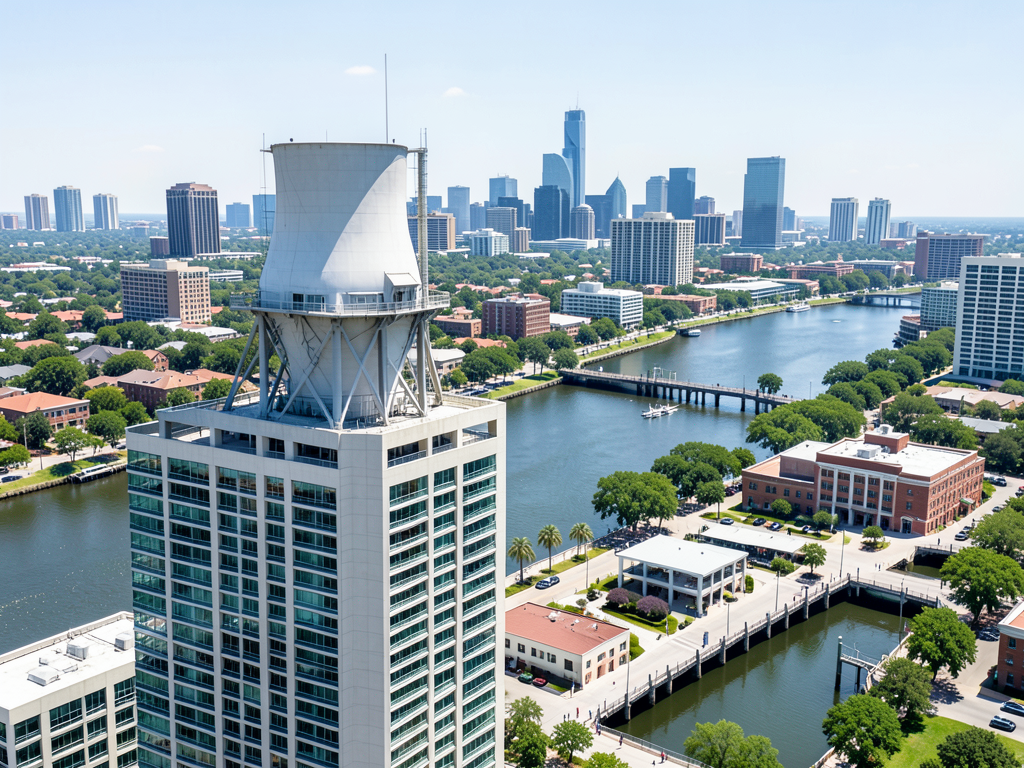
Specialized Cooling Challenges for High Rise Condos and Lofts Near the Riverwalk
High-rise condos and lofts along the San Antonio Riverwalk face cooling challenges that differ dramatically from single-family homes. The combination of downtown building codes, high humidity, and shared mechanical systems creates a unique environment where standard residential HVAC solutions simply do not work. Understanding these challenges is the first step toward maintaining consistent comfort and energy efficiency in vertical living spaces. San Antonio Energy Code Section 13-55.
Downtown San Antonio’s subtropical climate pushes cooling systems to their limits. The Riverwalk area experiences high humidity levels year-round with summer heat indexes frequently exceeding 105 degrees. These conditions strain rooftop equipment, water-cooled chillers, and vertical air distribution systems in ways that suburban installations never encounter. The dense urban environment also creates microclimates where heat from surrounding buildings and pavement intensifies cooling loads.
High-rise cooling systems must manage not only temperature but also humidity control across multiple floors. Unlike single-zone homes, these buildings use complex networks of air handlers, chilled water loops, and variable air volume boxes to deliver conditioned air to individual units. When any component in this chain fails, the effects ripple throughout the building, affecting dozens or even hundreds of residents simultaneously.
Building automation systems add another layer of complexity. Modern high-rises use computerized controls to balance airflow, monitor equipment performance, and optimize energy consumption. These systems require specialized knowledge to diagnose problems that might appear as simple temperature complaints but actually stem from sensor failures, software glitches, or communication breakdowns between building management systems.
Water treatment presents ongoing challenges in high-rise cooling towers. San Antonio’s water contains minerals that scale heat exchangers and promote biological growth in cooling towers. Without proper chemical treatment and monitoring, these systems lose efficiency and can harbor Legionella bacteria, creating health risks for building occupants. Regular testing and maintenance are not optional but required by local health codes. Commercial Maintenance Agreements.
Emergency response in high-rise buildings requires different protocols than residential service calls. Access to mechanical rooms, roof equipment, and tenant spaces often involves security clearance, coordination with building management, and specialized tools for working in confined spaces. The logistics of staging equipment in downtown locations, navigating parking restrictions, and working within noise ordinance hours add complexity to every service call. Emergency AC Repair in Alamo Heights for When Your Unit Dies at Midnight.
Energy efficiency regulations for high-rise buildings continue to evolve. The City of San Antonio has adopted stringent energy conservation standards that affect everything from equipment selection to operational procedures. Building owners must balance comfort, code compliance, and operating costs while managing tenant expectations in competitive downtown real estate markets.. Read more about Essential HVAC Maintenance Every San Antonio Landlord Needs to Know for the Summer Rush.
Tenant comfort complaints in high-rises often mask deeper system issues. A unit that feels warm might actually have restricted airflow from a clogged filter, a malfunctioning VAV box, or imbalanced water flow in the chilled water system. Technicians must think beyond individual units to diagnose problems that affect entire floors or buildings.
Preventative maintenance for high-rise systems requires detailed planning and coordination. Unlike residential systems that can be serviced during business hours, high-rise maintenance often needs to occur during off-peak periods to minimize tenant disruption. This requires advance scheduling, clear communication with building management, and the ability to work efficiently under time constraints.
Water source heat pump systems, common in many downtown high-rises, present unique challenges. These systems use a common water loop to reject or absorb heat from individual units, requiring careful balancing to ensure proper operation. Problems in one unit can affect the performance of others, creating cascading failures that impact building-wide comfort.
Air quality management in high-density living spaces requires sophisticated filtration and ventilation strategies. The concentration of people, cooking activities, and urban pollutants creates indoor air quality challenges that exceed those found in single-family homes. High-rise systems must filter outdoor air, control humidity, and maintain positive pressure to prevent infiltration of unconditioned air.
Sound transmission through HVAC systems can become a major tenant complaint in high-rise buildings. Ductwork, air handlers, and water pipes can transmit noise between units if not properly designed and maintained. Vibration isolation, sound attenuation, and proper equipment selection are essential for maintaining the quiet environments that downtown residents expect.
Electrical infrastructure in high-rise buildings must support heavy cooling loads during peak summer months. San Antonio’s power grid experiences stress during heat waves, and high-rise buildings often have backup power systems to maintain critical cooling functions during outages. Understanding these electrical systems is essential for proper HVAC maintenance and emergency response.
Renovation and retrofit projects in high-rise buildings present unique challenges. Working within occupied buildings requires dust control, noise management, and careful coordination to avoid disrupting tenant operations. Equipment replacement often involves rigging cranes or using service elevators to remove old units and install new equipment, requiring permits and traffic control in downtown areas.
Seasonal transitions in San Antonio create additional stress on high-rise cooling systems. The rapid temperature swings between winter and summer can cause expansion and contraction in piping systems, potentially leading to leaks or joint failures. Systems must be properly prepared for seasonal changes to prevent emergency breakdowns during extreme weather events.
Building envelope issues can compound cooling challenges in high-rise structures. Windows, balconies, and curtain wall systems that leak air or allow solar heat gain force cooling systems to work harder, increasing energy consumption and reducing comfort. Integration between building envelope maintenance and HVAC system operation is essential for optimal performance.
Tenant education plays a crucial role in high-rise cooling system performance. Residents who understand basic system operation, filter changes, and energy-saving practices can help prevent minor issues from becoming major problems. Building management that communicates effectively with residents about maintenance schedules and system limitations creates better outcomes for everyone.
Energy recovery ventilation systems are becoming more common in high-rise buildings as energy codes tighten. These systems capture waste heat from exhaust air to precondition incoming fresh air, reducing cooling loads and improving indoor air quality. However, they require specialized knowledge to maintain and can become sources of problems if not properly serviced.
Future trends in high-rise cooling include increased use of smart building technologies, integration with renewable energy systems, and more sophisticated energy management strategies. Building owners who invest in modern control systems and high-efficiency equipment can achieve significant operating cost savings while meeting increasingly strict environmental regulations.
The complexity of high-rise cooling systems demands technicians with specialized training and experience. Generic residential HVAC knowledge is insufficient for diagnosing and repairing the sophisticated equipment found in downtown high-rises. Property managers need contractors who understand the unique challenges of vertical building systems and can provide reliable, code-compliant service. Stone Oak AC Repair Services That Can Actually Handle the Texas Heat.
Call (726) 259-0059 today to schedule your inspection. Our technicians have the specialized knowledge and equipment needed to handle the unique cooling challenges of high-rise condos and lofts near the Riverwalk. Don’t wait until a small problem becomes a major disruption for your building’s residents.
High-Rise Cooling System Comparison
| System Type | Best For | Maintenance Requirements | Energy Efficiency | San Antonio Code Compliance |
|---|---|---|---|---|
| Chilled Water | Larger buildings over 10 stories | Monthly chemical treatment, annual cleaning | High with proper maintenance | Complies with San Antonio Energy Code Section 13-55 |
| Water Source Heat Pumps | Mid-rise buildings with variable loads | Quarterly loop balancing, annual cleaning | Moderate to high | Requires Title 25 TAC Chapter 290 compliance |
| Direct Expansion | Smaller high-rises, retrofit projects | Monthly filter changes, seasonal tune-ups | Variable, depends on equipment age | Must meet ASHRAE 90.1 standards |
| Variable Refrigerant Flow | New construction, luxury properties | Semi-annual refrigerant checks, filter monitoring | Very high with modern controls | Exceeds San Antonio Energy Code requirements |
Common High-Rise Cooling Problems
- Humidity Control Failure – When cooling towers cannot reject heat effectively, indoor humidity rises above 60%, creating uncomfortable and potentially unhealthy conditions.
- Water Loop Imbalance – In water source heat pump systems, improper flow rates can cause some units to freeze while others overheat.
- Building Automation System Errors – Sensor failures or programming errors can cause entire floors to receive incorrect temperature setpoints.
- Cooling Tower Scaling – Mineral buildup in San Antonio water reduces heat transfer efficiency by up to 30% if not properly treated.
- Electrical Overload – Simultaneous startup of multiple large compressors can trip building main breakers during peak demand.
Maintenance Schedule for High-Rise Cooling Systems
- Daily Checks
Monitor system pressures, temperatures, and alarm conditions through building automation interface.
- Weekly Inspections
Visually inspect cooling towers, check water levels, and verify chemical feed systems are operating.
- Monthly Maintenance
Clean or replace filters, check belt tension, lubricate motors, and test safety controls.
- Quarterly Services
Perform water quality testing, balance air and water flows, and calibrate sensors.
- Annual Overhaul
Clean condenser and evaporator coils, inspect electrical connections, and perform combustion analysis on boilers.
Frequently Asked Questions
Why does my high-rise condo feel humid even when the AC is running?
High humidity in high-rise units often indicates cooling tower problems, water loop imbalances, or inadequate dehumidification capacity. The shared nature of these systems means your unit’s performance depends on the entire building’s mechanical health.
How often should high-rise cooling systems be serviced?
High-rise systems require monthly to quarterly professional maintenance depending on the equipment type. Water-cooled systems need monthly chemical treatment and testing, while air-cooled systems typically need quarterly service to maintain efficiency.
What causes cooling system failures during San Antonio heat waves?
Heat waves create multiple stress factors: high outdoor temperatures reduce condenser efficiency, increased humidity loads overwhelm dehumidification capacity, and high electrical demand can cause voltage fluctuations that damage sensitive controls.
Are high-rise cooling systems more expensive to maintain than residential units?
Yes, high-rise systems typically cost 3-5 times more to maintain due to their complexity, the need for specialized technicians, and the requirement for regular water treatment and building automation monitoring.
How can building owners reduce cooling costs in high-rise properties?
Building owners can reduce costs through regular preventative maintenance, upgrading to high-efficiency equipment, implementing smart building controls, and educating tenants about energy conservation practices.
Don’t let cooling problems disrupt your downtown living experience. Call (726) 259-0059 now for expert service from technicians who understand the unique challenges of high-rise HVAC systems in San Antonio’s Riverwalk area. For more information, visit Title 25 TAC Chapter 290. For more information, visit ASHRAE 90.1 standards.
You may also find this helpful. Preparing Your Vacation Home or Rental for the San Antonio Summer Season.