
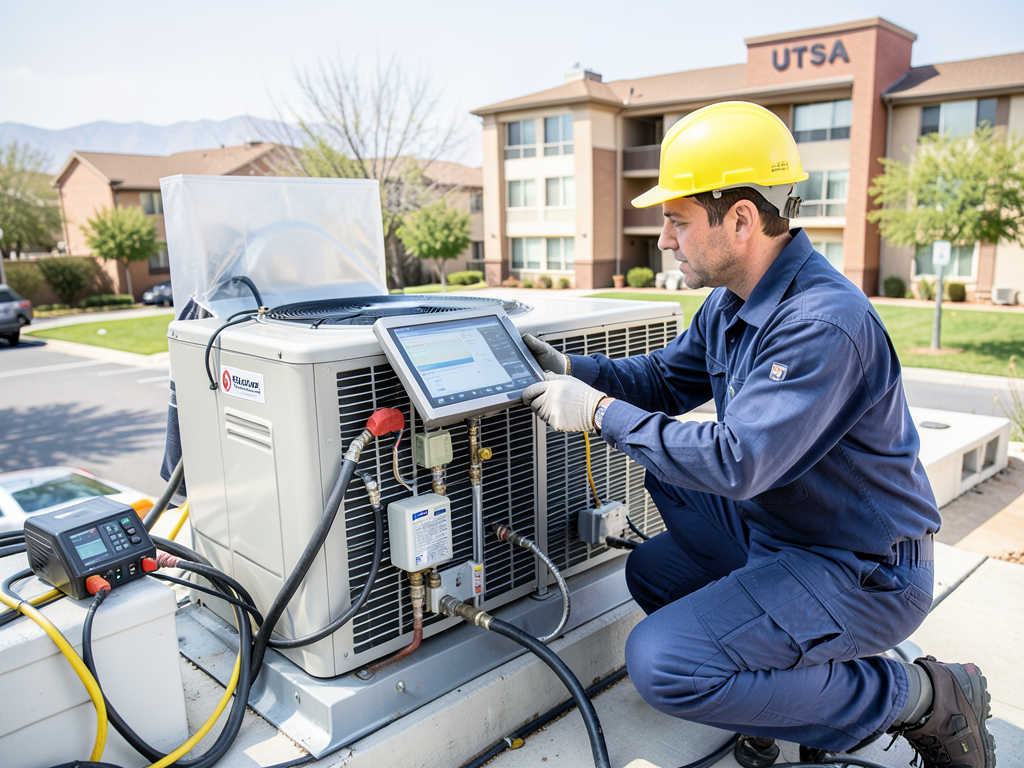
A Simple HVAC Maintenance Checklist for Landlords Managing Rental Properties Near UTSA
Managing rental properties near the University of Texas at San Antonio means dealing with Texas heat that can push your HVAC system to its limits. Your rental’s heating and cooling system represents a significant investment that directly impacts tenant satisfaction, property value, and your bottom line. This guide provides a practical maintenance checklist specifically designed for San Antonio landlords managing properties in the UTSA area. Texas Department of Licensing and Regulation.
San Antonio’s climate creates unique challenges for rental property HVAC systems. With summer temperatures frequently exceeding 100°F and humidity levels that can exceed 70%, your air conditioning unit works harder and longer than systems in most other parts of the country. This extreme workload means maintenance becomes even more critical for preventing costly breakdowns and extending equipment life. Premium Air Conditioning Installation for The Dominion and Shavano Park Homes.
Understanding Texas Property Code Requirements for Landlords
Before diving into maintenance specifics, it’s important to understand your legal obligations under Texas Property Code Section 92.052. This code requires landlords to provide and maintain a safe and functioning HVAC system that can adequately heat and cool the property. Failure to maintain proper heating and cooling can result in legal liability and tenant disputes. Commercial Maintenance Agreements.
The Texas Property Code specifically addresses habitability requirements. While the code doesn’t mandate specific temperatures, courts have generally interpreted it to mean your rental must maintain livable conditions. In San Antonio’s climate, this typically means keeping indoor temperatures below 85°F during summer months and above 60°F during winter.. Read more about How Texas Fire Ants Can Actually Destroy Your Leon Springs AC System (And How to Stop Them).
Additionally, San Antonio’s building code amendments require specific HVAC installation standards that affect maintenance requirements. The 2021 International Energy Conservation Code (IECC) standards adopted by the city mandate proper insulation levels and system sizing that impact how your equipment should perform and what maintenance it needs.. Read more about How Often You Should Really Change Your Air Filter if You Have Pets in Your Brooks City Base Home.
Essential HVAC Maintenance Checklist for Rental Properties
Regular maintenance prevents 80% of HVAC failures and can extend your system’s life by 3-5 years. Here’s a comprehensive checklist that covers all the critical components landlords need to monitor.
- Monthly Air Filter Inspection
Check and replace air filters every 30-60 days. In San Antonio’s dusty environment, filters clog faster than in other regions. Use MERV 8-11 filters for rental properties to balance air quality with system efficiency.. Read more about Managing Your San Antonio Short Term Rental HVAC System from Your Phone.
- Drain Line Cleaning
Clear condensate drain lines quarterly. San Antonio’s high humidity creates more condensation, and mineral-rich water from SAWS can cause scale buildup that clogs drains and causes water damage.. Read more about How to Clear a Clogged AC Drain Line Before It Floods Your Kirby Laundry Room.
- Outdoor Unit Inspection
Check condenser coils monthly during growing season. Remove debris, trim vegetation 2 feet back, and ensure proper airflow. San Antonio’s rapid plant growth can quickly obstruct outdoor units.
- Thermostat Calibration
Test thermostat accuracy seasonally. San Antonio’s extreme temperature swings can cause thermostat drift, leading to comfort complaints and higher energy bills.. Read more about Why Your Thermostat Location Might Be Making Your Live Oak Energy Bills Skyrocket.
- Refrigerant Level Check
Have a licensed technician check refrigerant levels annually. Low refrigerant indicates leaks that reduce efficiency and can damage compressors, especially during San Antonio’s long cooling season.. Read more about Detecting Freon Leaks in Your Monticello Park HVAC System Before the Compressor Fails.
- Electrical Connection Inspection
Check all electrical connections for corrosion and tightness. San Antonio’s high humidity accelerates corrosion on electrical components, creating fire hazards and system failures.
- Blower Motor and Belt Inspection
Inspect blower motors and belts for wear. San Antonio’s continuous operation during summer months causes more wear than systems in milder climates.
- Ductwork Inspection
Check accessible ductwork for leaks, especially in attics. San Antonio’s attic temperatures can exceed 150°F, accelerating duct deterioration and energy loss.
- Safety Control Testing
Test all safety controls including high-pressure switches and limit switches. These protect against catastrophic failures during San Antonio’s extreme heat events.
- Evaporator Coil Cleaning
Clean evaporator coils annually. San Antonio’s high humidity and pollen levels create ideal conditions for coil fouling, reducing efficiency by up to 30%.
Seasonal Maintenance Timeline for San Antonio Properties
Timing your maintenance correctly is crucial in San Antonio’s climate. Here’s a seasonal schedule that aligns with our local weather patterns and tenant turnover cycles.
| Season | Maintenance Tasks | Timing Considerations |
|---|---|---|
| Late Winter (Feb-Mar) | Full system inspection, refrigerant check, electrical testing | Before spring break and summer demand |
| Spring (Apr-May) | Coil cleaning, drain line clearing, filter replacement | Before peak cooling season |
| Summer (Jun-Aug) | Monthly filter checks, visual inspections | During highest usage period |
| Fall (Sep-Nov) | Thermostat calibration, safety control testing | Before heating season begins |
| Early Winter (Dec-Jan) | Heating system check, carbon monoxide testing | Before cold snaps arrive |
Late winter maintenance is particularly important in San Antonio because it allows you to address any issues before the summer rush when HVAC companies are booked weeks in advance. This timing also aligns with typical tenant turnover periods near UTSA.
Tenant vs. Landlord Responsibilities: Creating Clear Agreements
Clear communication about HVAC responsibilities prevents disputes and protects your investment. Here’s how to structure responsibilities between you and your tenants.
| Responsibility | Landlord | Tenant |
|---|---|---|
| Professional Maintenance | Annual professional tune-up | Monthly filter changes |
| Emergency Repairs | All repairs and replacements | Report issues promptly |
| Filter Replacement | Provide initial filters | Replace monthly during occupancy |
| System Modifications | None permitted without approval | No unauthorized changes |
| Utility Management | System efficiency maintenance | Reasonable thermostat settings |
Include specific HVAC clauses in your lease agreement. Document all maintenance performed and provide tenants with simple instructions for basic care. This documentation proves you’ve met your legal obligations under Texas Property Code.
San Antonio-Specific HVAC Challenges and Solutions
San Antonio’s unique climate and infrastructure create specific challenges for rental property HVAC systems. Understanding these local factors helps you implement more effective maintenance strategies.
The high humidity in San Antonio (averaging 65-70% year-round) causes several issues. First, it increases the cooling load on your AC system, making it work harder. Second, it promotes mold growth in ductwork and on evaporator coils. Third, it causes more condensation that can overwhelm drain systems if not properly maintained.
San Antonio’s water quality from SAWS also affects HVAC systems. The hard water contains high mineral content that creates scale buildup in drain lines and on coils. This mineral buildup reduces efficiency and can cause premature component failure.
Additionally, San Antonio’s rapid temperature swings between seasons stress HVAC components. Systems must transition from cooling to heating more frequently than in other regions, requiring more frequent calibration and testing of control systems.
Cost-Benefit Analysis of Regular Maintenance
Investing in regular HVAC maintenance for your rental properties near UTSA provides substantial returns. Here’s a breakdown of the financial impact.
| Maintenance Activity | Annual Cost | Potential Savings | ROI Period |
|---|---|---|---|
| Professional Tune-up | $150-250 | 15-20% energy savings | 1-2 years |
| Filter Program | $80-120 | 5-10% energy savings | 1 year |
| Drain Maintenance | $100-150 | Prevents $2,000+ water damage | Immediate |
| Coil Cleaning | $200-300 | 30% efficiency improvement | 2-3 years |
| System Lifespan Extension | $500-800 | 3-5 extra years of use | 5-7 years |
The numbers show that a $1,000 annual maintenance investment can save $2,000-3,000 in energy costs and repair expenses while extending your system’s life by several years. For a typical rental property, this represents a 200-300% return on investment. Stone Oak AC Repair Services That Can Actually Handle the Texas Heat.
CPS Energy Rebates and Energy Efficiency Programs
Take advantage of CPS Energy programs to reduce your HVAC maintenance and upgrade costs. These programs are specifically designed for San Antonio property owners and can significantly offset your expenses. CPS Energy rebates and programs.
CPS Energy offers several rebate programs for high-efficiency HVAC equipment. The Smart Thermostat rebate provides $85 for qualifying programmable thermostats. The Home Energy Rebate offers up to $2,500 for comprehensive energy efficiency improvements including HVAC upgrades.
The CPS Energy Savers Program provides free energy audits for rental properties. These audits identify specific efficiency improvements and may qualify you for additional rebates. Many landlords near UTSA have used these programs to upgrade older systems at minimal cost.
Additionally, the Texas Powerful Smart program offers rebates for high-efficiency HVAC equipment that meets SEER2 standards. These federal and state incentives can reduce the cost of system replacements by 20-30%.
Emergency Response Planning for Rental Properties
Even with excellent maintenance, HVAC systems can fail during San Antonio’s extreme heat. Having an emergency response plan protects your tenants and your investment. Emergency AC Repair in Alamo Heights for When Your Unit Dies at Midnight.
First, establish relationships with HVAC contractors who offer 24/7 emergency service. Many companies near UTSA have specific rental property programs with priority service for property managers.
Second, create a temporary cooling plan for your properties. This might include providing portable AC units, fans, or arranging for tenants to stay elsewhere during repairs. Document these plans in your lease agreements. Fast Furnace Repair Services in Boerne for Those Random Hill Country Cold Snaps.
Third, maintain a fund specifically for emergency HVAC repairs. Set aside $500-1,000 per property to cover after-hours service calls and expedited parts delivery during peak season.
Finally, educate your tenants about emergency procedures. Provide them with contact information for after-hours service and instructions for temporary cooling measures while waiting for repairs.
Documentation and Record Keeping
Proper documentation protects you from liability and helps track maintenance effectiveness. Here’s what to document for each property.
Maintain a maintenance log for each HVAC system including installation dates, all service calls, repairs performed, and parts replaced. Include photos of equipment condition and any issues discovered during inspections.
Keep all receipts and invoices for at least 5 years. These documents prove you’ve met your legal obligations under Texas Property Code and can be crucial in tenant disputes.
Document all tenant communications about HVAC issues. Save emails, texts, and maintenance request forms. This paper trail shows you responded promptly to tenant concerns.
Finally, track energy usage and repair frequency for each property. This data helps identify when replacement becomes more cost-effective than continued repairs.
Choosing the Right HVAC Service Provider
Selecting a qualified HVAC service provider is crucial for rental property management. Look for these specific qualifications when choosing a contractor near UTSA.
First, verify they hold a valid Texas HVAC license through the Texas Department of Licensing and Regulation. Ask for their license number and verify it online.
Second, ensure they carry proper insurance including general liability and workers’ compensation. Request certificates of insurance and verify coverage limits meet your requirements.
Third, look for experience with multi-family and rental properties. Contractors familiar with landlord-tenant dynamics understand the urgency of repairs and the importance of detailed documentation.
Fourth, check their availability for emergency service. The best contractors offer 24/7 emergency response with guaranteed response times for rental properties.
Finally, ask about maintenance agreements specifically designed for property managers. These programs often include priority service, discounted rates, and simplified billing that saves time and money.
Technology Integration for Property Management
Modern technology can simplify HVAC management for rental properties near UTSA. Consider these tools to improve efficiency and reduce costs.
Smart thermostats allow remote monitoring and control of HVAC systems. You can track temperature settings, receive alerts for unusual usage patterns, and even make adjustments remotely. Many models integrate with property management software.
Building automation systems can monitor multiple properties from a central dashboard. These systems track energy usage, schedule maintenance, and alert you to potential problems before tenants notice them.
Mobile apps for maintenance tracking help organize service requests, schedule inspections, and maintain documentation. Look for apps that integrate with your accounting software for streamlined expense tracking.
Finally, consider IoT sensors that monitor specific HVAC components. These sensors can detect refrigerant leaks, monitor compressor performance, and alert you to developing problems before they cause system failures.
Long-term Planning for HVAC Replacement
Even with excellent maintenance, HVAC systems eventually need replacement. Planning for this expense protects your cash flow and ensures continuous tenant comfort.
Track the age and condition of each system in your portfolio. Most AC units last 12-15 years in San Antonio’s climate, while furnaces typically last 15-20 years. Start planning for replacement when systems reach 10-12 years of age.
Budget for replacement costs, which typically range from $4,000-8,000 for a standard residential system in San Antonio. Consider setting aside $50-100 per month per property in a replacement reserve fund.
Time replacements during off-peak seasons when contractor demand is lower and prices may be more competitive. Late fall and early winter often provide the best value for system replacements.
Consider upgrading to high-efficiency systems when replacing older equipment. The energy savings often offset the higher initial cost within 3-5 years, especially with CPS Energy rebates available for qualifying equipment.
Frequently Asked Questions
How often should I have my rental property HVAC system professionally serviced?
Schedule professional maintenance twice yearly – once in late winter before cooling season and once in fall before heating season. This schedule aligns with San Antonio’s climate demands and helps prevent summer breakdowns.
What’s the average lifespan of an AC unit in San Antonio?
Most AC units last 12-15 years in San Antonio’s climate, compared to 15-20 years in milder regions. The extreme heat and humidity create more wear on components, making regular maintenance even more critical.
Can I require tenants to pay for HVAC filter replacements?
Yes, you can include filter replacement responsibility in your lease agreement. However, many landlords provide the first few filters and require tenants to purchase replacements thereafter to ensure proper filter quality is maintained.
What should I do if a tenant reports their AC isn’t working during a heatwave?
Respond within 24 hours for emergency AC failures during extreme heat. Have a relationship with an emergency HVAC service provider who can respond quickly. Consider providing temporary cooling solutions while repairs are completed.
Are there specific HVAC requirements for rental properties near UTSA?
While there are no UTSA-specific requirements, all rental properties in San Antonio must comply with Texas Property Code habitability standards and local building codes. Properties near campus often face higher usage demands due to student occupancy patterns.
Take Action to Protect Your Investment
Your rental property’s HVAC system is too important to leave to chance. The extreme San Antonio climate and high tenant expectations near UTSA make regular maintenance essential for protecting your investment and maintaining positive cash flow.
Start by scheduling a professional HVAC inspection for each property in your portfolio. This baseline assessment will identify any immediate issues and help you create a customized maintenance plan. Document everything and establish clear communication channels with your tenants about their responsibilities.
Remember that proactive maintenance costs far less than emergency repairs or early system replacement. The $500-1,000 annual investment in proper HVAC care typically saves $2,000-3,000 in avoided repairs and energy costs while extending equipment life by several years.
Ready to protect your rental property investment? Call (726) 259-0059 today to schedule a comprehensive HVAC inspection and maintenance plan for your properties near UTSA. Our experienced technicians understand the unique challenges of San Antonio’s climate and can help you create a maintenance strategy that maximizes your ROI while keeping your tenants comfortable year-round.
Don’t wait for a system failure during the next heatwave. Pick up the phone and call (726) 259-0059 now to ensure your rental properties are prepared for whatever Texas weather brings. Your tenants, your wallet, and your peace of mind will thank you.
You may also find this helpful. Designing a Garden Around Your Shavano Park AC Unit Without Killing Your Airflow.