
Keeping Those High Ceiling Living Rooms Cool in Cibolo Canyons Without Breaking the Bank
High ceilings make Cibolo Canyons homes feel spacious and grand but they also trap heat and drive up cooling costs. In San Antonio’s 100-degree summers, vaulted living rooms can be 8-10 degrees warmer than the rest of the house because hot air rises and stays trapped overhead. The good news is you do not need to tear down walls or install a second system to fix this. Smart HVAC adjustments, fan placement, and targeted upgrades can cool those tall spaces efficiently without sending your utility bill through the roof.
Why High Ceilings Stay Hot in Cibolo Canyons
Hot air rises due to thermal stratification. In a standard 8-foot ceiling room, the temperature difference between floor and ceiling is minimal. In a 16- to 20-foot vaulted space, that difference can be 10-15 degrees. The problem gets worse in Cibolo Canyons because:
- South-facing windows pour sunlight onto high walls all afternoon
- Attic heat radiates through the ceiling plane
- Standard HVAC vents are mounted high on walls where they push cold air up instead of down
- Humidity from the Gulf stays trapped in the tall air column, making it feel even warmer
The result is a room that never feels as cool as the thermostat setting and a system that runs longer to compensate.
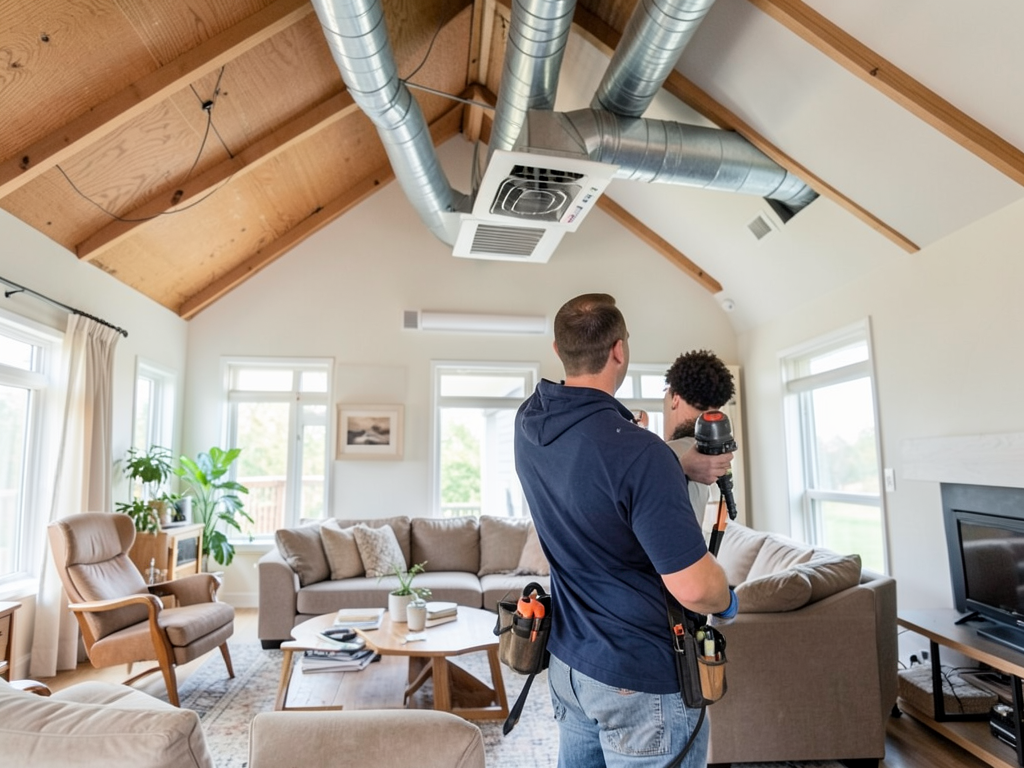
Diagram showing thermal stratification in a vaulted ceiling with hot air trapped at the top and cool air settling at the floor level.
Top 5 Solutions for Cooling Vaulted and Two-Story Rooms
You can tackle the heat problem without a full system replacement. Here are the most effective fixes for Cibolo Canyons homes:
- Install a high-wall return air vent near the ceiling peak. This pulls the hottest air directly out of the room before it can circulate downward.
- Add a ceiling fan with the correct blade span. For ceilings over 12 feet, use a 60- to 72-inch fan. In summer, run it counterclockwise to push air down.
- Upgrade to a variable-speed air handler. These systems adjust airflow based on demand and can run longer at lower speeds to mix the air column without wasting energy.
- Seal and insulate the attic above the vaulted space. Radiant barrier foil or spray foam can cut ceiling heat gain by up to 30 percent.
- Consider a ductless mini-split for the room. A separate head unit can deliver targeted cooling without overworking the main system.
The Role of Ceiling Fan Direction in Summer vs. Winter
Many homeowners run fans year-round but few know the correct seasonal setting. In summer, set the fan to spin counterclockwise. This creates a downward breeze that makes you feel 4-5 degrees cooler. In winter, reverse the direction clockwise on low speed. This pulls cool air up and pushes warm air down along the walls, reducing the need for the furnace to run. Fast Furnace Repair Services in Boerne for Those Random Hill Country Cold Snaps.
For Cibolo Canyons’ mild winters, the winter setting is optional. The summer setting is critical for comfort and energy savings.
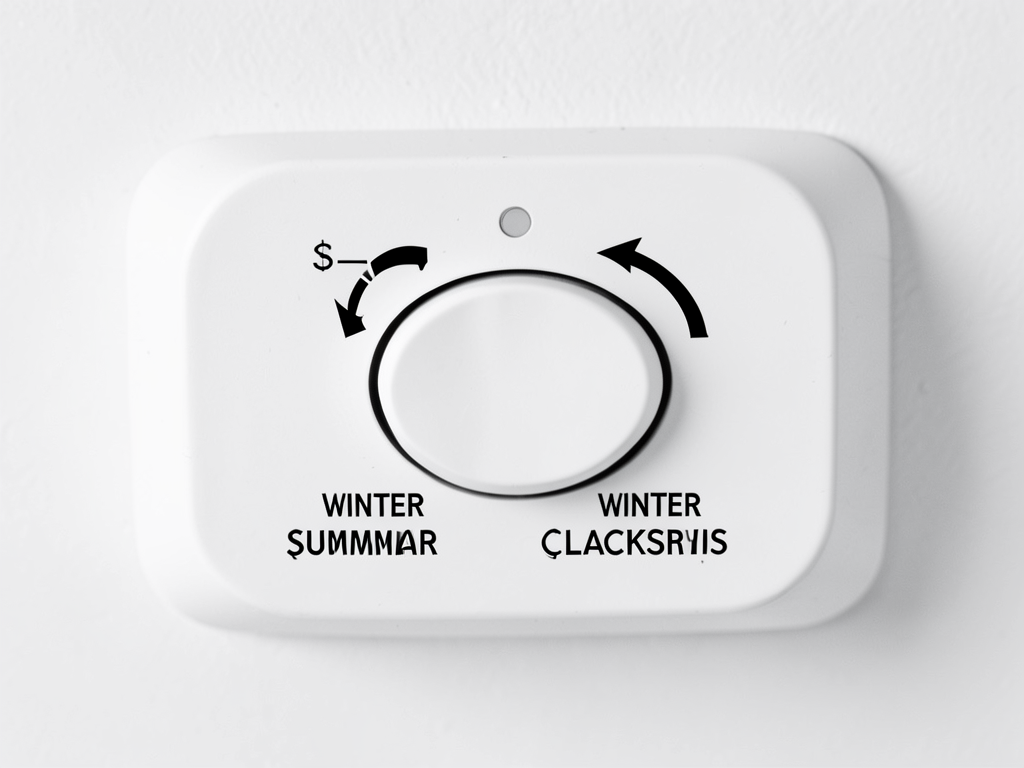
Close-up photo of a ceiling fan directional switch with summer (counterclockwise) and winter (clockwise) labels clearly visible.
Zoned HVAC Systems vs. Ductless Mini-Splits: Which is Best for Your SA Home?
Both options can solve hot-room problems but they work differently.
| Feature | Zoned HVAC System | Ductless Mini-Split |
|---|---|---|
| Installation Cost | $3,500 – $7,000 | $2,500 – $5,000 |
| Energy Efficiency | Moderate (depends on zone control) | High (SEER2 up to 22) |
| Best For | Whole-house balancing | Single-room cooling |
| Retrofitting Ease | Moderate (requires damper system) | Easy (no ducts needed) |
| Humidity Control | Good with variable-speed handler | Excellent with inverter tech |
Zoning works well if you want to balance the entire house and already have ductwork. Mini-splits shine for targeted cooling in problem areas like a vaulted living room.
Energy Efficiency Tips: Managing San Antonio’s Humidity and Solar Heat Gain
High ceilings increase the volume of air your system must cool but humidity makes it feel even worse. San Antonio’s average summer humidity runs 65-70 percent. At that level, a 78-degree room feels like 83 degrees. Here is how to fight back:
- Install low-E window film on south and west-facing glass. This can block up to 70 percent of solar heat gain.
- Use smart thermostats with humidity sensors. Set a target humidity of 50 percent to feel cooler without lowering the temperature.
- Replace standard air filters with high-MERV pleated filters. Better airflow means more even cooling.
- Schedule seasonal maintenance. Dirty coils and low refrigerant cut efficiency by up to 20 percent.
Combining these steps can cut cooling costs by 15-25 percent while improving comfort.
When to Call a Professional: Sizing Your AC for Large Volumes of Air
DIY fixes help but some problems need a pro. Call an HVAC technician if:
- Your system runs constantly but the room stays hot
- You notice weak airflow from vents
- The air feels clammy even when the AC is on
- Your energy bills spike without a clear reason
A professional will perform a Manual J load calculation to determine if your current system can handle the cubic footage. In Cibolo Canyons, many builders oversize systems for speed of construction, which hurts efficiency. A properly sized unit with the right return placement can solve the problem without replacing the entire system.
Call (726) 259-0059 today to schedule your inspection. We will measure your room volume, check airflow, and recommend the most cost-effective fix for your vaulted living room.
Frequently Asked Questions
Can I just add more vents to my high-ceiling room?
Adding vents without balancing the system can make other rooms colder and waste energy. A professional airflow analysis is the first step.
How much does a high-wall return vent cost?
Installation typically runs $400 – $800 including drywall repair and wiring. It is one of the most cost-effective fixes for tall spaces. EPA Energy Saver tips.
Will a bigger AC unit cool my vaulted room better?
Not necessarily. Oversized units short-cycle, meaning they cool air quickly but do not run long enough to remove humidity. Proper sizing and airflow are more important than raw BTU capacity.
Do ceiling fans actually save money?
Yes. A ceiling fan uses about 60 watts versus 3,500 watts for a central AC. Running a fan can let you raise the thermostat 4 degrees with no comfort loss.
How often should I clean my return vents?
Every 6 months in homes with vaulted ceilings. Dust and pet hair can block airflow and reduce efficiency.
Still sweating in your vaulted living room? Call (726) 259-0059 now and let our San Antonio HVAC pros diagnose the problem before the next heat wave hits. For more information, visit Energy.gov thermostat guide.