Modern Cooling Solutions for the Unique Layouts of Government Hill Bungalows
Government Hill’s historic bungalows built in the early 1900s present unique cooling challenges that standard HVAC systems simply cannot address. These charming homes with their lath-and-plaster walls, pier-and-beam foundations, and lack of attic space require specialized approaches that preserve architectural integrity while delivering modern comfort. The thick masonry walls and narrow crawlspaces common in the 78208 zip code area demand solutions beyond conventional ductwork.
Homeowners in this historic district face a critical decision: either endure inadequate cooling that strains energy bills or risk damaging irreplaceable architectural features with invasive installations. The solution lies in understanding the specific constraints of these structures and applying targeted technologies that work within those boundaries.
Why Government Hill Homes Need Specialized Cooling Approaches
Government Hill’s bungalows feature construction methods that make traditional HVAC installation nearly impossible. The lath-and-plaster walls cannot support the weight of standard duct chases, and the balloon framing common in these homes creates air movement challenges that central systems struggle to overcome. Many properties lack the closet space required for air handlers, and the historic preservation guidelines from San Antonio’s Office of Historic Preservation prohibit visible outdoor units in many cases. San Antonio Office of Historic Preservation.
The humid subtropical climate of San Antonio compounds these challenges. Summer temperatures regularly exceed 100 degrees Fahrenheit, and Gulf moisture creates indoor humidity levels that make poorly cooled spaces feel even warmer. These conditions require systems that not only cool effectively but also manage moisture levels without creating condensation issues within historic wall assemblies.. Read more about Solving Airflow Issues in the Historic Narrow Lot Homes of Dignowity Hill.
High-Velocity Systems: The Invisible Solution
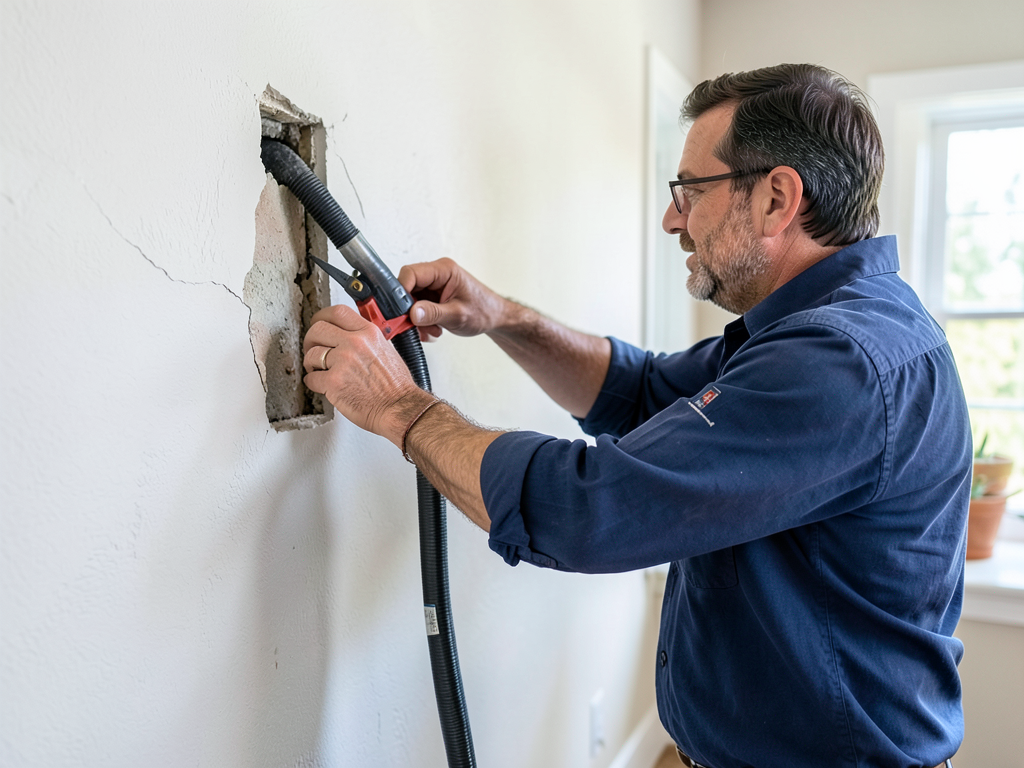
High-velocity HVAC systems represent the most elegant solution for Government Hill’s historic homes. These systems use flexible, small-diameter tubing instead of standard ductwork, allowing installation through existing wall cavities without demolition. The Unico System and SpacePak represent the two primary manufacturers serving this market.
The tubing measures just two inches in diameter, compared to the six to eight inches required for traditional ducts. This size difference allows installers to route lines through existing stud bays, between floor joists, and even through ceiling cavities without visible alterations. The system delivers conditioned air through specialized outlets that can be painted to match existing trim or installed flush with walls.
High-velocity systems operate at significantly higher airspeeds than conventional systems, typically moving air at 1,000 to 2,000 feet per minute. This velocity creates better air mixing and temperature distribution throughout rooms, addressing the uneven cooling common in older homes with poor air circulation. The system’s ability to remove humidity is particularly valuable in San Antonio’s climate, often removing 30% more moisture than standard systems. Uneven Heating or Cooling.
Installation costs typically range from $8,000 to $15,000 depending on home size and complexity, with most installations completed in three to five days. The system’s energy efficiency often results in 20-30% lower operating costs compared to older central air systems, providing long-term savings that offset the initial investment.
Ductless Mini-Split Systems for Historic Preservation
Ductless mini-split systems offer another preservation-friendly cooling solution for Government Hill homes. These systems consist of an outdoor compressor unit connected to one or more indoor air handlers through refrigerant lines and condensate drains. The indoor units mount on walls or ceilings without requiring any ductwork.
Mitsubishi Electric, Daikin, and LG produce mini-split systems specifically designed for historic applications. These units feature low-profile designs that minimize visual impact, with some models offering paintable covers that blend with existing wall colors. The outdoor units can be positioned on side yards or rear patios where they remain less visible from the street, complying with historic district guidelines.
Modern mini-splits achieve SEER2 ratings up to 26, significantly exceeding the 14 SEER minimum required by current building codes. This efficiency translates to lower energy consumption and reduced strain on the ERCOT power grid during San Antonio’s peak summer demand periods. The systems also provide excellent humidity control, removing up to 1.5 gallons of moisture per hour in high-humidity conditions.
Installation requires only a three-inch hole through exterior walls for refrigerant lines, making the process minimally invasive. Most installations complete within one to two days, and the systems offer the flexibility to cool individual rooms or zones independently. This zoning capability proves particularly useful in bungalows where different areas may have varying cooling needs based on sun exposure and room usage.
Navigating San Antonio’s Historic Preservation Requirements
The Government Hill Historic District falls under the jurisdiction of San Antonio’s Office of Historic Preservation and the Historic and Design Review Commission. These agencies enforce strict guidelines that protect the neighborhood’s architectural character while allowing necessary modernizations.
Property owners must obtain a Certificate of Appropriateness before installing any exterior HVAC components. This process involves submitting detailed plans showing equipment locations, screening methods, and how the installation preserves the building’s historic character. The HDRC typically approves mini-split outdoor units when positioned on rear elevations or screened with landscaping or fencing that matches the neighborhood’s historic character.
For high-velocity systems, the approval process focuses on interior modifications. Since these systems require no exterior changes, they often receive expedited approval. However, installers must still demonstrate that wall penetrations and outlet locations preserve original plaster and woodwork. The San Antonio Development Services Department maintains specific guidelines for mechanical system installations in historic districts, requiring detailed documentation of existing conditions before work begins.
Energy efficiency upgrades may qualify for additional considerations under the San Antonio Energy Efficiency Program. Homes achieving certain efficiency thresholds can receive expedited review processes, reducing the typical 30-day approval timeline to as little as two weeks. These programs encourage preservation-minded upgrades that improve both comfort and sustainability.
Preserving Architectural Integrity During Installation
Successful HVAC installation in historic homes requires techniques that protect irreplaceable architectural elements. Installers must understand the construction methods used in early 20th-century bungalows, including the differences between true dimensional lumber and modern dimensional lumber, the characteristics of early plaster formulations, and the load-bearing capacities of original framing.
Technicians use specialized tools to locate original studs and joists without damaging plaster surfaces. Thermal imaging cameras help identify optimal routing paths for tubing and wiring, avoiding areas with potential moisture issues or structural weaknesses. Moisture meters test existing wall conditions before any penetrations occur, ensuring that installation does not introduce new water infiltration points.
Plaster repair requires matching the original lime-based formulations used in 1920s construction. Modern drywall compounds create visible differences in texture and color that detract from historic character. Skilled technicians maintain relationships with plasterers who specialize in historic restoration, ensuring that any necessary repairs blend seamlessly with existing surfaces. Stone Oak AC Repair Services That Can Actually Handle the Texas Heat.
Floor protection becomes critical when working in homes with original hardwood flooring. Installers use specialized dollies and lifting equipment to move heavy components without scratching or denting delicate surfaces. Drop cloths and temporary flooring protect against dust and debris during the installation process.
Energy Efficiency and Cost Considerations
Modern cooling solutions for historic homes must balance initial costs with long-term energy savings. High-velocity systems typically cost 20-30% more than conventional systems but offer superior efficiency that reduces monthly utility bills. The systems’ ability to remove humidity means homeowners can set thermostats several degrees higher while maintaining comfort, further reducing energy consumption.
Energy efficiency tax credits available through the federal government can offset up to 30% of installation costs for qualifying high-efficiency systems. The Inflation Reduction Act of 2022 expanded these credits, making modern HVAC upgrades more affordable for historic homeowners. Local utility rebates from CPS Energy provide additional incentives, with some programs offering up to $500 for installations that exceed minimum efficiency standards. CPS Energy Rebate Programs.
The return on investment calculation must consider both energy savings and property value preservation. Homes with modern, efficient HVAC systems typically sell for 3-5% more than comparable properties with outdated systems. For historic properties, the ability to maintain original character while providing modern comfort often proves decisive for potential buyers.
Maintenance costs for specialized systems run slightly higher than conventional systems due to the need for technicians trained in high-velocity or mini-split technology. However, these systems typically require service only once annually, and their modular design means that problems in one zone do not affect the entire system. Commercial Maintenance Agreements.
Case Study: A Government Hill Bungalow Transformation
A recent project on Euclid Avenue demonstrates how modern cooling solutions can transform a historic bungalow without compromising its character. The 1925 Craftsman-style home suffered from inadequate cooling despite multiple window unit attempts and a failing central system. The homeowners wanted to preserve the original woodwork and plaster while achieving consistent comfort throughout the 1,800 square foot home.
The installation team selected a high-velocity system with three air outlets strategically placed to provide even coverage. The outdoor unit positioned on the side yard behind a decorative screen that matched the home’s existing fencing. Interior outlets installed flush with walls in locations that preserved original door and window casings.
Before installation, technicians mapped the home’s existing conditions using thermal imaging to identify heat gain patterns and potential routing paths. They discovered that the original balloon framing created ideal pathways for the flexible tubing, eliminating the need for any wall demolition. The installation completed in four days with minimal disruption to the household.
Post-installation testing revealed 40% improvement in temperature consistency throughout the home, with all rooms maintaining within two degrees of the thermostat setting. Humidity levels dropped from an average of 68% to 52%, significantly improving comfort without the clammy feeling common in poorly cooled spaces. The homeowners reported 25% reduction in summer energy bills despite maintaining lower thermostat settings.
The project received approval from the HDRC within two weeks, with reviewers specifically noting how the installation preserved the home’s historic character while providing necessary modern amenities. The success of this project has led to similar installations throughout the Government Hill neighborhood.
Common Installation Challenges and Solutions
Historic home installations present unique challenges that require creative problem-solving. Limited crawlspace access in pier-and-beam construction often complicates routing for condensate drains and electrical connections. Installers use flexible drain lines and remote pump systems to overcome these obstacles, positioning condensate pumps in accessible locations while maintaining proper drainage slopes.
Electrical service limitations in older homes may require panel upgrades to support modern HVAC systems. Many Government Hill homes still use fuse boxes or undersized breaker panels that cannot handle the electrical load of high-efficiency systems. Installers coordinate with licensed electricians to upgrade service while preserving original electrical enclosures when possible.
Foundation movement common in San Antonio’s expansive clay soils can create alignment issues for outdoor units and refrigerant lines. Installers use adjustable mounting brackets and flexible connections to accommodate seasonal foundation shifts without stressing system components. These accommodations prevent refrigerant line failures that commonly occur when rigid installations cannot adapt to soil movement.
Noise concerns often arise when installing outdoor units near bedrooms or living areas. Modern systems feature sound-dampening technology that reduces outdoor noise to 55 decibels or less, comparable to normal conversation levels. Additional sound barriers using landscaping or fencing can further reduce noise transmission while maintaining historic district compliance.
Maintenance and Longevity Considerations
Specialized HVAC systems require specific maintenance protocols to ensure longevity and performance. High-velocity systems need annual cleaning of the main unit and individual outlets, with particular attention to the system’s sound attenuators which can accumulate dust and debris. The small diameter tubing requires professional cleaning every three to five years to prevent airflow restrictions.. Read more about HVAC Maintenance Tips for Military Families Moving to the Lackland AFB Area.
Mini-split systems need regular filter cleaning every one to three months depending on household conditions. The outdoor units require clear space around them for proper airflow, with recommended clearance of at least two feet on all sides. Homeowners should monitor condensate drains for clogs, as the systems’ high efficiency can create significant moisture removal that requires proper drainage.
Both system types benefit from professional maintenance that includes checking refrigerant levels, testing electrical connections, and verifying thermostat calibration. The specialized nature of these systems means that not all HVAC technicians have the training to service them properly. Homeowners should verify that technicians have specific experience with high-velocity or mini-split technology before scheduling service.
System lifespan typically ranges from 15 to 20 years for high-velocity systems and 12 to 15 years for mini-splits, though proper maintenance can extend these timelines significantly. The modular design of both systems means that individual components can be replaced without replacing the entire system, reducing long-term ownership costs.
Comparing Modern Solutions to Traditional Approaches
Traditional HVAC installation in historic homes often involves extensive demolition to create space for ductwork, potentially damaging irreplaceable architectural features. These invasive approaches frequently require removing original plaster, modifying structural elements, or creating unsightly bulkheads to conceal ducts. The resulting alterations can significantly reduce a historic home’s value and character.
Modern solutions offer preservation-friendly alternatives that maintain architectural integrity while providing superior comfort. The following comparison highlights key differences between traditional and modern approaches:
Installation Impact
Traditional Ducted System
Modern Solution
Wall Modifications
Extensive demolition for ducts
Minimal penetrations only
Exterior Changes
Visible roof penetrations
Hidden or screened units
Installation Time
1-2 weeks
2-5 days
Energy Efficiency
Standard SEER ratings
Up to SEER2 26
Humidity Control
d>Basic moisture removal
Superior dehumidification
Historic Compliance
Often denied
Typically approved
The cost comparison reveals that while modern systems have higher upfront costs, their superior efficiency and lower installation impact often result in better long-term value. Traditional systems may save $2,000 to $4,000 initially but can cost significantly more when accounting for restoration of damaged historic features and higher energy bills.
Future-Proofing Your Historic Home
Modern cooling solutions do more than provide immediate comfort; they prepare historic homes for future climate challenges. San Antonio’s climate continues to warm, with summer temperatures projected to increase by 3-5 degrees over the next 30 years. The frequency of extreme heat days above 100 degrees is expected to triple by 2050, making efficient cooling systems essential for both comfort and safety.
High-efficiency systems also prepare homes for potential power grid challenges. CPS Energy’s demand response programs offer incentives for homeowners who install systems that can reduce peak demand. Some modern systems include smart technology that automatically adjusts operation during grid stress events, potentially preventing brownouts while maintaining comfort.
The modular nature of modern systems allows for future upgrades and expansions. As homeowners add insulation, upgrade windows, or implement other energy improvements, modern HVAC systems can adapt through simple control adjustments rather than requiring complete replacement. This flexibility protects the initial investment while allowing the home to evolve with changing needs and technologies.
Integration with renewable energy systems represents another future-proofing consideration. Modern high-efficiency systems pair well with solar panel installations, potentially allowing historic homes to achieve net-zero energy consumption. The reduced electrical demand of these systems means smaller, less expensive solar installations can meet total home energy needs.
Making the Right Choice for Your Home
Selecting the appropriate cooling solution requires evaluating multiple factors specific to each historic home. Home size, existing infrastructure, preservation requirements, and budget all influence the optimal choice. A thorough assessment by technicians experienced in historic properties can identify the most suitable approach.
Key evaluation criteria include the home’s architectural significance, the extent of existing system failures, and the homeowner’s comfort expectations. Properties with national historic landmark status may face stricter preservation requirements than those in local historic districts. Homes with severe structural issues may require more extensive work regardless of the cooling system chosen.
Professional assessment should include detailed measurements, thermal imaging analysis, and evaluation of existing electrical service. The assessment should also review historic district guidelines and identify any potential approval challenges. This comprehensive approach ensures that the selected system meets both comfort needs and preservation requirements.
Budget planning should account for both immediate costs and long-term value. While modern systems require higher initial investment, their efficiency, preservation benefits, and potential tax incentives often provide superior overall value. The assessment should include detailed cost comparisons and return on investment projections specific to the property.
Frequently Asked Questions
Will installing modern HVAC damage my historic plaster walls?
Modern high-velocity and mini-split systems are specifically designed to minimize wall damage. High-velocity systems use flexible tubing that routes through existing cavities without demolition, while mini-splits require only a three-inch hole for refrigerant lines. Both approaches preserve original plaster and woodwork when installed by experienced technicians.
How long does it take to get approval from the Historic and Design Review Commission?
Approval typically takes 30 days for standard applications, though expedited review is available for energy-efficient upgrades. The process involves submitting detailed plans showing equipment locations and screening methods. High-velocity systems often receive faster approval since they require no exterior changes, while mini-splits need approval for outdoor unit placement and screening.
Are there tax incentives for installing efficient HVAC in historic homes?
Yes, the federal government offers tax credits covering up to 30% of costs for qualifying high-efficiency systems. The Inflation Reduction Act expanded these credits, and local utility rebates from CPS Energy provide additional incentives. Some energy efficiency programs offer expedited approval processes for qualifying installations in historic districts.
Can I install the system myself to save money?
DIY installation is strongly discouraged for these specialized systems. High-velocity and mini-split systems require specific training, tools, and knowledge of historic construction methods. Improper installation can damage historic features, void warranties, and create safety hazards. Professional installation ensures proper operation, preserves historic integrity, and maintains manufacturer warranties.
How do I maintain these specialized systems?
Both system types require annual professional maintenance to ensure optimal performance. High-velocity systems need outlet cleaning and main unit servicing, while mini-splits require regular filter cleaning every one to three months. The specialized nature means not all HVAC technicians have the training to service them properly, so verify technician experience before scheduling service.
Take the Next Step Toward Comfort
Your Government Hill bungalow deserves cooling that respects its historic character while providing modern comfort. The specialized solutions available today make it possible to preserve irreplaceable architectural features while eliminating the hot, humid conditions that plague older homes. These systems offer the perfect balance of preservation and performance.
Don’t let another summer pass with inadequate cooling that damages both your comfort and your home’s historic value. The assessment process is straightforward and comes with no obligation. Our technicians understand the unique challenges of Government Hill’s historic homes and can recommend solutions tailored to your specific property.
Call (726) 259-0059 today to schedule your historic home cooling assessment. We’ll evaluate your home’s specific needs, review preservation requirements, and provide detailed recommendations for achieving the comfort you deserve without compromising the character you love. Your Government Hill bungalow can have both historic charm and modern cooling efficiency.
Pick up the phone and call (726) 259-0059 before the next heat wave hits. Our team is ready to help you transform your historic home into the comfortable, efficient space you’ve always wanted while preserving the architectural details that make Government Hill special.
– Diagram showing flexible tubing routing through wall cavities versus traditional duct installation in historic homes.
– Before and after photos of a Government Hill bungalow with a high-velocity system installation, showing preserved plaster and woodwork.
– Technical illustration comparing the physical footprint of high-velocity outlets versus traditional HVAC vents in historic interiors.
Schedule Professional Assessment
Have experienced technicians evaluate your home’s specific needs, existing infrastructure, and preservation requirements.
Review Preservation Guidelines
Understand San Antonio’s Office of Historic Preservation requirements and Historic and Design Review Commission approval processes.
Compare System Options
Evaluate high-velocity versus mini-split systems based on your home’s architecture, budget, and efficiency goals.
Plan for Installation
Coordinate with licensed contractors who understand historic construction methods and preservation requirements.
Prepare for Approval Process
Submit required documentation to obtain Certificate of Appropriateness before beginning any work.
Contact Us
Ready to experience HVAC service you can count on? Contact Patriot today for fast, expert support from a team that values your time, comfort, and satisfaction. Whether you need a quick repair, full installation, or 24/7 emergency help, we’re standing by. Our pricing is fair, our technicians are certified, and our service is unmatched. Let’s bring comfort back to your space — call now or request a free quote!