
Why Your Lavaca Pier and Beam Home Feels Damp Compared to Modern Slabs
Your Lavaca pier and beam home was built for a different era. Those charming hardwood floors and elevated foundations that give your house character also create a unique moisture challenge that modern slab homes simply don’t face. The combination of San Antonio’s high humidity, clay soil expansion, and the stack effect in pier and beam construction means your HVAC system is fighting an uphill battle against moisture that’s literally rising from the ground up.. Read more about Modern Cooling Solutions for the Unique Layouts of Government Hill Bungalows.
Unlike slab foundations that sit directly on the ground with a vapor barrier, pier and beam homes have a crawl space underneath that allows humid air to circulate beneath your living area. In Lavaca’s historic district, many homes were built before modern moisture control standards existed, and the original ventilation designs that worked in the 1920s and 1930s struggle to keep up with today’s humidity levels. Your air conditioner isn’t just cooling the air—it’s constantly trying to remove moisture that’s seeping up through the subfloor and being drawn into your living space by the stack effect.
How Pier and Beam Construction Creates Humidity Problems in San Antonio
The stack effect is the primary culprit behind your home’s dampness. As warm air rises through your house, it creates negative pressure that pulls air from the crawl space through gaps around pipes, electrical penetrations, and even through the hardwood flooring itself. In San Antonio’s climate zone 2A, where summer dew points regularly exceed 70°F, that crawl space air is often warmer and more humid than the conditioned air inside your home.
San Antonio’s expansive clay soil compounds the problem. The Blackland Prairie clay beneath Lavaca holds moisture like a sponge, and without proper vapor barriers, that moisture migrates upward through the foundation piers and into your crawl space. During our rainy spring months, the soil can stay saturated for weeks, creating a constant source of humidity that your HVAC system must combat.
The age of Lavaca’s homes adds another layer of complexity. Many historic pier and beam homes have settled over the decades, creating gaps in the subfloor and around the sill plate where moisture-laden air can infiltrate. Original ductwork installed in unconditioned crawl spaces also sweats profusely when cold air moves through warm, humid spaces—a phenomenon we see constantly during San Antonio’s summer months.
Signs Your HVAC System is Battling Crawl Space Moisture
Your air conditioner might be working perfectly, but if you’re experiencing these symptoms, your pier and beam construction is creating an uphill battle against humidity. Cupping hardwood floors are often the first visible sign—the edges of your floorboards rise slightly as they absorb moisture from below. This isn’t just cosmetic damage; it’s evidence that your subfloor is staying too damp.
High indoor relative humidity readings despite your AC running constantly is another red flag. In San Antonio’s climate, your indoor humidity should stay between 45-55% when the system is operating correctly. If you’re consistently above 60%, your HVAC system is losing the moisture removal battle. Many Lavaca homeowners report their AC runs constantly but the air still feels “sticky”—that’s the telltale sign of excessive crawl space moisture.. Read more about Why Garden Ridge Homeowners Are Upgrading to Variable Speed AC Systems.
Mold or mildew growth on baseboards and lower walls indicates moisture is condensing on cool surfaces. In pier and beam homes, this often happens because the crawl space air is being pulled into the living area and depositing moisture on surfaces that stay cooler than the dew point. You might also notice a persistent musty odor that gets worse during humid weather—that’s the smell of microbial growth in your crawl space being circulated through your home.
Comprehensive Solutions for Lavaca Pier and Beam Homes
The most effective solution for pier and beam humidity is crawl space encapsulation. This involves sealing the crawl space with a heavy-duty vapor barrier—typically 12 to 20-mil polyethylene—covering the ground and extending up the foundation walls. In Lavaca’s historic homes, we often need to address existing moisture damage first, replacing rotted sill plates and treating any mold growth before encapsulation can begin. The EPA recommends vapor barriers with permeance ratings below 0.01 perms for effective moisture control in humid climates. EPA crawl space construction guidelines.
Whole-home dehumidification systems offer another layer of protection. Unlike portable units, whole-home dehumidifiers like the Aprilaire or Santa Fe models integrate with your existing HVAC system to maintain optimal humidity levels throughout your home. In San Antonio’s climate, we typically recommend units rated for at least 70-90 pints per day for a 2,000-square-foot pier and beam home. These systems can maintain indoor humidity at 45-50% even when outdoor conditions are much more humid.. Read more about Why a Whole-Home Dehumidifier is the Secret to Surviving the Humidity in Von Ormy.
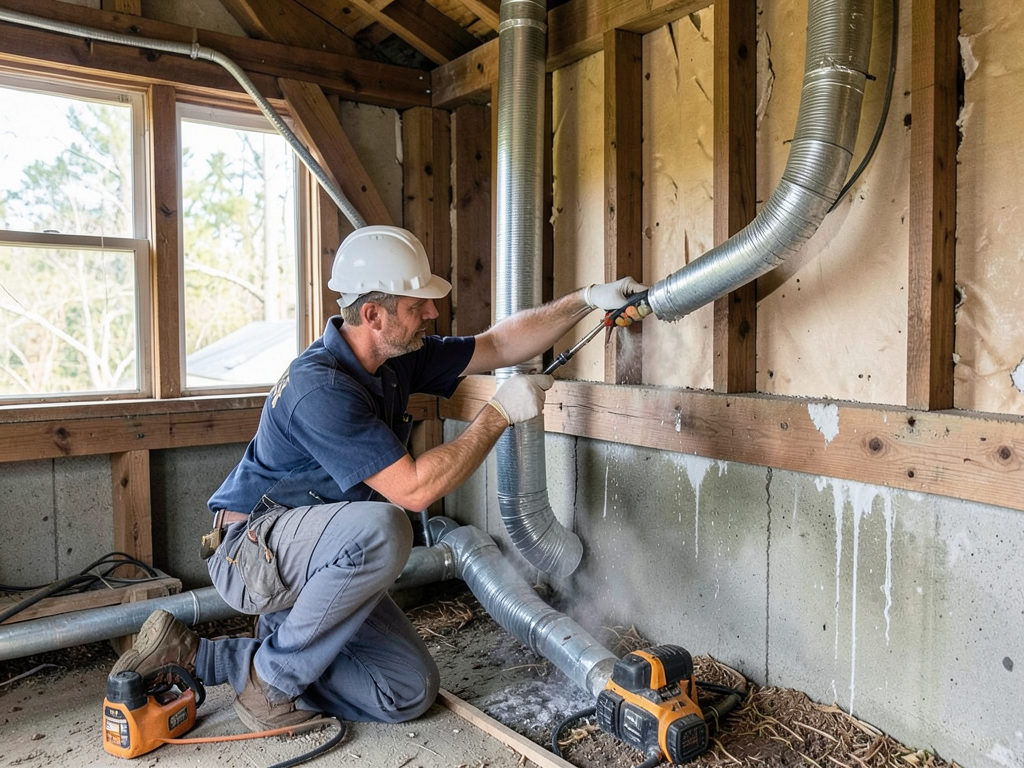
Ductwork insulation and sealing is critical for pier and beam homes. Uninsulated ducts in humid crawl spaces sweat profusely, adding moisture to the space and reducing system efficiency. We recommend R-8 insulation on all ductwork in unconditioned spaces, plus mastic sealing of all joints to prevent air leakage. This not only stops sweating but also prevents the stack effect from pulling unconditioned air through duct leaks.. Read more about Why Your AC Vents are Sweating and Dripping Onto Your San Antonio Floors.
Why AC Sizing Matters More in Pier and Beam Homes
Oversized air conditioners create a perfect storm for humidity problems in pier and beam homes. When your AC is too large for your home’s cooling load, it cools the space so quickly that it doesn’t run long enough to remove moisture effectively. This “short cycling” is particularly problematic in Lavaca’s historic homes, where the crawl space adds an extra thermal and moisture load that many HVAC contractors don’t account for when sizing replacement units.
The ACCA Manual J calculation process becomes even more critical for pier and beam homes. We need to account for the additional heat gain from the crawl space, the moisture load from the soil, and the infiltration through the subfloor. Many Lavaca homes built in the early 20th century have had multiple AC replacements over the decades, often with progressively larger units that actually make the humidity problem worse.
Variable-speed air handlers offer a sophisticated solution for pier and beam homes. These systems can run at lower speeds for longer periods, maximizing moisture removal while maintaining comfort. The indoor blower motor adjusts its speed based on cooling demand, allowing the system to remove more moisture per kilowatt-hour than single-speed units. In San Antonio’s climate, this can reduce indoor humidity by an additional 5-10% compared to standard equipment.
Maintenance Tips for Pier and Beam Homeowners
Regular crawl space inspections can prevent small moisture problems from becoming major issues. We recommend checking your crawl space at least twice yearly—once before summer and once after the rainy season. Look for standing water, condensation on ductwork, and signs of pest intrusion. Many Lavaca homeowners are surprised to discover their crawl space conditions during these inspections, often finding issues that have been affecting their comfort for years. Finding a Reliable AC Replacement Specialist in New Braunfels.
Foundation vent management is counterintuitive but important. While traditional advice suggested keeping crawl space vents open for ventilation, modern building science shows that in humid climates like San Antonio, closed and conditioned crawl spaces perform better. We recommend closing foundation vents seasonally and considering mechanical ventilation or dehumidification instead of passive venting.
Condensate drain line maintenance becomes even more critical in pier and beam homes. The additional moisture load means your AC is removing more water from the air, and a clogged drain line can cause water to back up into your system. We recommend annual drain line cleaning and installing a secondary drain pan with a float switch under your air handler—a small investment that can prevent major water damage. Commercial Maintenance Agreements.
Comparing Pier and Beam vs. Modern Slab Construction
| Feature | Pier and Beam Homes | Modern Slab Homes |
|---|---|---|
| Foundation Moisture Control | Crawl space with vents or encapsulation needed | Vapor barrier under slab |
| HVAC Duct Location | Often in unconditioned crawl space | Typically in conditioned attic or interior |
| Humidity Management | Requires whole-home dehumidification | Standard AC often sufficient |
| Age-Related Issues | Settling, gaps, original materials | Modern construction standards |
| Energy Efficiency | Lower due to crawl space losses | Higher with modern insulation |
The fundamental difference comes down to how each foundation type handles moisture migration. Slab homes rely on a continuous concrete barrier with a vapor retarder to block soil moisture, while pier and beam homes must actively manage the air and moisture in the crawl space. In San Antonio’s humid climate, this makes slab construction inherently more resistant to humidity problems, though both foundation types require proper moisture management for optimal comfort.
Frequently Asked Questions
Why does my pier and beam home feel more humid than my neighbor’s slab home?
Pier and beam construction allows humid air to circulate beneath your home and be drawn into your living space through the stack effect. Unlike slab foundations that block soil moisture with a vapor barrier, pier and beam homes have a crawl space that can become a source of humidity, especially in San Antonio’s climate where dew points regularly exceed 70°F.
Can I just add more insulation to fix the humidity problem?
Adding insulation alone won’t solve humidity issues in pier and beam homes. While proper insulation helps with energy efficiency, it doesn’t address the fundamental moisture migration from the crawl space. You need to control the moisture source through encapsulation, dehumidification, or both before insulation can be fully effective.. Read more about Solving Airflow Issues in the Historic Narrow Lot Homes of Dignowity Hill.
How much does crawl space encapsulation cost in Lavaca?
Crawl space encapsulation for a typical Lavaca pier and beam home costs between $5,000 and $12,000 depending on the size of your crawl space, the condition of existing materials, and whether you need additional moisture remediation. The investment typically pays for itself through improved comfort, lower energy bills, and prevented moisture damage.
Will a bigger air conditioner solve my humidity problems?
No, an oversized air conditioner will actually make humidity problems worse. Large units cool too quickly and don’t run long enough to remove moisture effectively. The solution is proper system sizing, whole-home dehumidification, and addressing the crawl space moisture source rather than just increasing cooling capacity.
How often should I have my pier and beam home’s crawl space inspected?
We recommend professional crawl space inspections twice yearly—before summer cooling season and after the rainy season. These inspections can catch moisture problems, pest issues, and duct leakage before they affect your home’s comfort and air quality. Many issues in pier and beam homes develop slowly over time, making regular inspections essential.
Take Control of Your Home’s Comfort Today
Living with excessive humidity isn’t just uncomfortable—it can damage your home’s structure, create health issues from mold growth, and waste energy as your AC struggles to keep up. The unique construction of Lavaca’s historic pier and beam homes requires specialized knowledge to diagnose and solve humidity problems effectively. Generic HVAC solutions that work for modern slab homes often fail completely in these older structures.
Our team understands the specific challenges that San Antonio’s climate and soil conditions create for pier and beam homes. We’ve helped dozens of Lavaca homeowners transform their damp, uncomfortable houses into dry, comfortable homes through targeted solutions that address the root causes of moisture problems. Whether you need crawl space encapsulation, a whole-home dehumidifier, or a properly sized HVAC system designed for your home’s unique construction, we have the expertise to solve your humidity issues.
Don’t let another summer of sticky air and musty odors pass by. Call (726) 259-0059 today to schedule your comprehensive humidity assessment. We’ll evaluate your home’s specific conditions and recommend solutions that actually work for pier and beam construction in San Antonio’s climate. Your home should be comfortable year-round, not just when the humidity drops outside. For more information, visit Department of Energy crawl space insulation guide.
You may also find this helpful. Why Your Tobin Hill Apartment Stays Humid Even When the Air is Blowing Cold.