
The Real Lifespan of an Air Conditioner in the South Texas Heat
In San Antonio your air conditioner works harder than almost anywhere else in the country. While national averages suggest AC units should last 15-20 years the brutal combination of 100-degree summer days Gulf Coast humidity and limestone dust in South Texas typically reduces that lifespan to just 10-12 years. That means if your system is approaching its teenage years you’re living on borrowed cooling time. Stone Oak AC Repair Services That Can Actually Handle the Texas Heat.
The difference comes down to thermal stress. In San Antonio’s climate zone 2/3 transition area your AC compressor runs nearly year-round not just during summer months. Each cooling cycle creates microscopic metal fatigue in the compressor and those cycles add up fast when you’re running 3000+ hours annually compared to the national average of 1500 hours.. Read more about How to Keep Your Outdoor AC Unit Safe from San Antonio Hail and Storms.
Let me walk you through what actually happens to your system in the Texas heat and when it’s time to start budgeting for replacement.. Read more about What to Do When Your China Grove HVAC System Takes a Hit from a Power Surge.
What Makes San Antonio AC Units Fail Faster
The San Antonio heat does not just make your AC work harder it attacks your system from multiple angles. The humidity from Gulf moisture forces your system to remove gallons of water from the air every day which means your evaporator coil stays wet and becomes a breeding ground for microbial growth. That dirty sock syndrome smell is not just unpleasant it is a sign your coil efficiency is dropping by 15-20%.. Read more about The Connection Between Your San Antonio Roof Health and Your AC Performance.
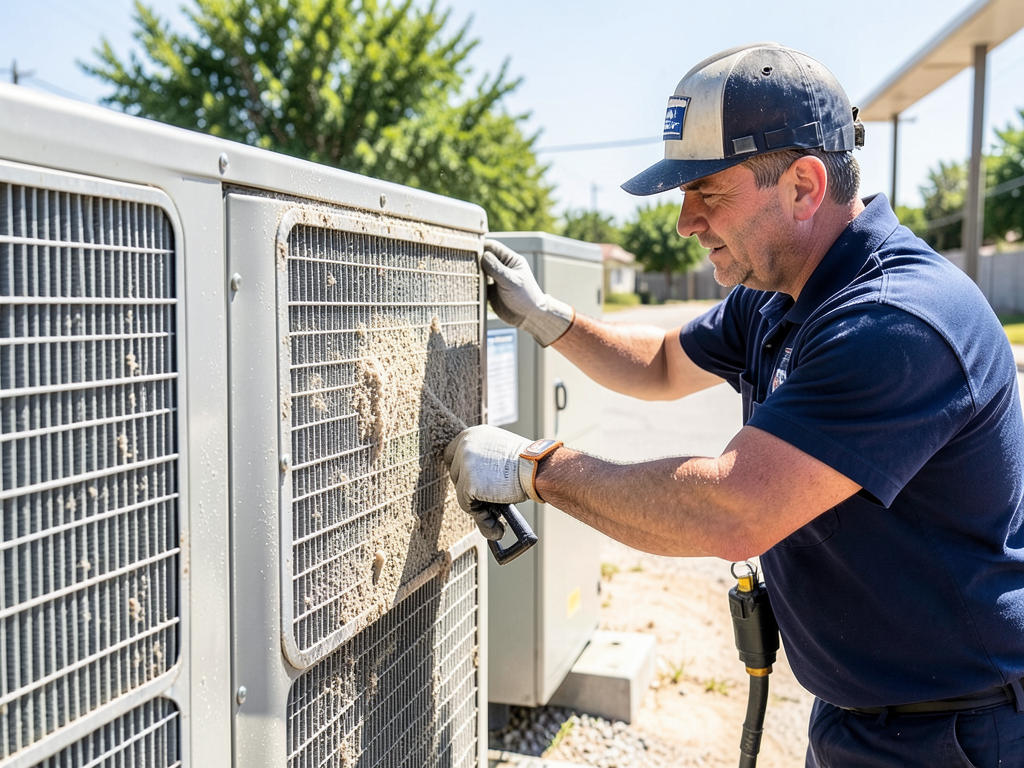
Then there is the limestone dust. San Antonio sits on the Edwards Plateau where calcium carbonate particles settle on your outdoor condenser coil. These microscopic deposits create an insulating layer that forces your compressor to work 25-30% harder to reject heat. Over time that extra strain becomes the difference between a 15-year unit and a 10-year unit.
According to San Antonio City Code Section 34-121 new AC installations must meet specific efficiency standards but even the most efficient system cannot overcome the cumulative effects of South Texas heat cycles.
The Component Breakdown: What Actually Fails First
Understanding which parts fail first helps you make smarter decisions about repairs versus replacement. Here is what we typically see in San Antonio homes: EPA refrigerant phaseout information.
| Component | Average Lifespan in San Antonio | Common Failure Signs |
|---|---|---|
| Compressor | 10-12 years | Hard starting clicking sounds tripped breakers |
| Capacitor | 5-7 years | Unit won’t start humming noise |
| Evaporator Coil | 8-10 years | Reduced cooling ice buildup leaks |
| Condenser Coil | 10-12 years | Reduced efficiency higher bills |
| Blower Motor | 12-15 years | Weak airflow squealing noises |
The capacitor is usually the first to go. It is the component that gives your compressor that initial jolt to start running. In San Antonio’s heat capacitors fail every 5-7 years because the extreme temperatures cause the internal dielectric material to break down. That is why we check capacitors during every maintenance visit.
The compressor however is the heart of your system. When it fails after 10-12 years you are typically looking at a $2500-4000 repair on a unit that is already halfway through its expected life. At that point replacement often makes more financial sense. Emergency AC Repair in Alamo Heights for When Your Unit Dies at Midnight.
Heat Pump vs. Central Air: Does It Matter in Texas?
Heat pumps have gained popularity in San Antonio but they face unique challenges in our climate. While they are efficient for heating during our mild winters they run almost continuously during summer months which can actually shorten their lifespan compared to traditional AC systems.. Read more about Transitioning Away from R-22 Freon and What it Actually Costs San Antonio Homeowners.
The key difference is that heat pumps transfer heat rather than generate it which means they are working year-round. In San Antonio’s climate a well-maintained heat pump typically lasts 10-14 years while a traditional central air system might last 12-15 years under the same conditions.
However modern heat pumps with inverter technology can actually outlast traditional systems because they do not cycle on and off as frequently. Instead of running at full blast or not at all they modulate their output to match the cooling demand which reduces thermal stress on components.
The Maintenance Factor: Can You Extend Your AC’s Life?
Regular maintenance is the single biggest factor in extending your AC’s lifespan. Here is what that looks like in San Antonio:
- Spring Tune-up
Clean condenser coils check refrigerant levels test capacitors lubricate motors. This prevents summer failures when you need cooling most.
- Fall Check
Inspect heating components clean evaporator coils check electrical connections. Even though we do not use heat much this catches issues before they become problems.
- Monthly Filter Changes
In San Antonio’s dusty environment standard 1-inch filters should be changed monthly during peak season. This simple step can add 2-3 years to your system’s life.
Homeowners who follow this schedule typically see their systems last 2-4 years longer than those who only call when something breaks. The cost of annual maintenance ($150-200) pales in comparison to the $4000-8000 replacement cost.
SEER2 and the 2024 Efficiency Standards
The Department of Energy’s SEER2 standards which took full effect in 2023 have changed the replacement equation for San Antonio homeowners. SEER2 measures cooling efficiency under more realistic conditions than the old SEER standard and the minimum requirement jumped from 13 to 14.3 SEER2.
This matters because if your current system is 10-12 years old it is likely operating at 10-12 SEER. Replacing it with a modern 16 SEER2 unit could cut your cooling costs by 30-40% which often pays for the replacement within 5-7 years through energy savings alone.
Plus older R-22 refrigerant systems are becoming obsolete. If your system uses R-22 (phased out in 2020) you are paying premium prices for refrigerant that is getting harder to find. Modern systems use R-410A or the newer R-454B which are more efficient and environmentally friendly. Premium Air Conditioning Installation for The Dominion and Shavano Park Homes.
Warning Signs: When to Stop Repairing and Start Replacing
How do you know when it is time to replace rather than repair? Here are the red flags we see in San Antonio homes: Fast Furnace Repair Services in Boerne for Those Random Hill Country Cold Snaps.
- Rising Energy Bills – If your cooling costs have increased 20% or more over the past two years despite similar usage your system is losing efficiency.
- Frequent Repairs – When you are calling for service more than once a year the cumulative repair costs often exceed the value of keeping the old system.
- Strange Noises – Grinding rattling or clicking sounds indicate internal component wear that typically leads to major failures within months.
- Uneven Cooling – If some rooms are hot while others are cold your system may be struggling to maintain proper airflow due to aging components.
- Age Factor – If your system is over 10 years old and needs a major repair (compressor coil or fan motor) replacement is usually the smarter investment.
We use a simple rule of thumb: if the repair cost exceeds 30% of the replacement cost and your system is over 8 years old replacement typically makes more financial sense.. Read more about Expert Repair Services for Propane Furnaces in Rural Elmendorf and South Bexar County.
The San Antonio Replacement Cost Reality
Replacing an AC system in San Antonio typically costs $4000-8000 for a standard 2-3 ton residential unit depending on efficiency rating home size and installation complexity. High-efficiency systems with variable-speed technology can run $8000-12000 but offer significantly lower operating costs.
The good news is that CPS Energy offers rebates up to $1650 for high-efficiency AC replacements which can substantially offset the upfront cost. These rebates are designed to reduce peak summer demand on the ERCOT grid which San Antonio experiences during those 100-degree streaks.
When you factor in energy savings rebates and the avoided cost of future repairs a new system often pays for itself within 5-8 years while providing reliable cooling for the next 12-15 years. Finding a Reliable AC Replacement Specialist in New Braunfels.
Making the Right Decision for Your Home
The decision to repair or replace is not just about age or symptoms. It is about understanding your home’s specific needs. A 2500-square-foot home in Alamo Heights with older ductwork has different requirements than a new construction home in Schertz with modern insulation.. Read more about Signs Your Selma Home Needs a New Blower Motor Before the Summer Hits.
Before making a decision have a qualified technician perform a complete system analysis. This should include checking refrigerant levels measuring airflow inspecting ductwork for leaks and calculating your home’s cooling load. Many homeowners are surprised to learn that their system is not properly sized for their home which can explain years of comfort issues.
The bottom line is this: in San Antonio’s heat waiting until your system completely fails often means emergency replacement during the hottest weeks of summer when prices are highest and wait times are longest. Planning ahead gives you control over the process and ensures you get the right system for your home.
Comparison: San Antonio vs. National AC Lifespan
| Component | National Average Lifespan | San Antonio Average Lifespan | Difference |
|---|---|---|---|
| Complete System | 15-20 years | 10-12 years | -3 to -8 years |
| Compressor | 12-15 years | 10-12 years | -2 to -3 years |
| Capacitor | 7-10 years | 5-7 years | -2 to -3 years |
| Evaporator Coil | 10-15 years | 8-10 years | -2 to -5 years |
| Condenser Coil | 15-20 years | 10-12 years | -3 to -8 years |
Step-by-Step AC Maintenance Process
Here is exactly what a professional technician does during a maintenance visit in San Antonio:
- Visual Inspection
Check for obvious damage leaks or corrosion on all components. Look for limestone dust buildup on condenser coils which is common in zip codes 78209 78212 and 78213.
- Electrical Testing
Measure voltage and amperage on all motors. Test capacitor performance since San Antonio’s heat causes capacitors to fail earlier than national averages.
- Refrigerant Check
Verify proper charge and check for leaks. San Antonio’s humidity means systems often need slightly different charge levels than manufacturer specifications suggest.
- Coil Cleaning
Clean both evaporator and condenser coils. The limestone dust in neighborhoods like Stone Oak and Alamo Heights requires more frequent cleaning than other areas.
- Blower Component Check
Inspect blower wheel for debris and check motor bearings. San Antonio’s dust means blower wheels often need cleaning twice yearly.
- Drain Line Inspection
Clear condensate drain lines. San Antonio’s high humidity means drain lines clog faster and can cause water damage if not maintained.
- Thermostat Calibration
Test and calibrate thermostat. Many San Antonio homes have older mercury thermostats that need replacement for better efficiency.
- Safety Controls
Test all safety switches and controls. San Antonio’s power grid fluctuations mean surge protection is often needed.
Why San Antonio’s Climate Specifically Damages AC Units
San Antonio’s unique combination of factors creates a perfect storm for AC wear and tear:
Heat Index Impact – When the thermometer hits 100 degrees the heat index in San Antonio often reaches 105-110 degrees due to humidity. This forces your AC to work 15-20% harder than the temperature alone suggests.
Limestone Dust – The Edwards Plateau limestone creates a fine white dust that settles on condenser coils. In neighborhoods like Castle Hills and Terrell Hills this dust can reduce efficiency by 25% within a single cooling season.
Humidity Load – San Antonio’s Gulf moisture means your AC removes 2-3 times more water from the air than systems in drier climates. This constant moisture exposure accelerates corrosion on metal components.
Power Grid Stress – ERCOT grid fluctuations during summer peak demand can cause voltage spikes that damage capacitors and control boards. Homes in areas with older electrical infrastructure like parts of downtown 78205 are particularly vulnerable.
Construction Age – Many San Antonio homes built between 1960-1990 have original ductwork that leaks 20-30% of cooled air. This forces systems to run longer and creates hot spots that cause uneven wear.
Frequently Asked Questions
How long should an air conditioner last in San Antonio?
Most AC units in San Antonio last 10-12 years due to the extreme heat high humidity and limestone dust that stresses components. With excellent maintenance some systems can reach 15 years but that is the exception rather than the rule.
Is it worth repairing a 10-year-old AC unit?
It depends on the repair cost. If a repair exceeds 30% of replacement cost and your system is over 8 years old replacement usually makes more financial sense. Also consider that older units are less efficient so you are paying higher energy bills even when they are working.
What SEER rating should I choose for a new AC in San Antonio?
For San Antonio’s climate a 16-18 SEER2 unit typically offers the best balance of upfront cost and long-term savings. Higher SEER ratings cost more initially but can reduce cooling costs by 30-40% compared to older 10-12 SEER units.
How much does it cost to replace an AC in San Antonio?
Standard replacement costs range from $4000-8000 for a typical 2-3 ton residential system. High-efficiency systems with variable-speed technology cost $8000-12000 but offer significantly lower operating costs and may qualify for CPS Energy rebates.
Can I extend my AC’s life with maintenance?
Yes. Regular maintenance can add 2-4 years to your system’s life. This includes annual professional tune-ups monthly filter changes during peak season and keeping the outdoor unit clear of debris and limestone dust buildup.
Call (726) 259-0059 today to schedule your AC inspection. Do not wait until your system fails on the hottest day of the year. Our NATE-certified technicians will provide a honest assessment of your system’s condition and help you make the right decision for your home and budget.
Pick up the phone and call (726) 259-0059 before the next 100-degree streak hits. Your comfort depends on making the right choice now not during an emergency. For more information, visit U.S. Department of Energy air conditioning guide.